Trusted by 150+ SaaS, Tech & Consulting Brands



.svg)

.svg)
.svg)


WordPress to Webflow migration: cost, timeline, and SEO-safe process
What it is
Best for
Typical cost
Timeline
What’s included in your WordPress to Webflow migration


Mapping


We apply FAQ, HowTo, Article, Organization, Product, and custom schema to give AI engines clean, structured data to work with.


We rewrite and reorganize key pages so they are answer-ready: question-first, intent-aligned, and contextually complete.



CMS and content restructuring
Content is reorganized into a scalable Webflow CMS with clear page relationships and structure.

Performance and Core Web Vitals improvements
Websites are optimized for faster load times, improved Core Web Vitals, and better overall performance.
.svg)
OUR PROCESS
Deliverables

Deliverables

Deliverables

Deliverables

Deliverables

Explore Webflow migration scenarios
Different teams require different migration approaches depending on timeline, complexity, and business goals. Explore the most common Webflow migration scenarios:
Webflow vs WordPress: performance, cost, and maintenance
Criteria
Webflow
WordPress
.svg)



Why companies migrate from WordPress to Webflow

Faster load times and improved Core Web Vitals

Reduced dependency on plugins

Better content management for marketing teams
Improved security and reduced maintenance
What It’s like working with Broworks
Real conversations with marketing teams on redesigning, migrating, and scaling their websites.
Jillian Renken
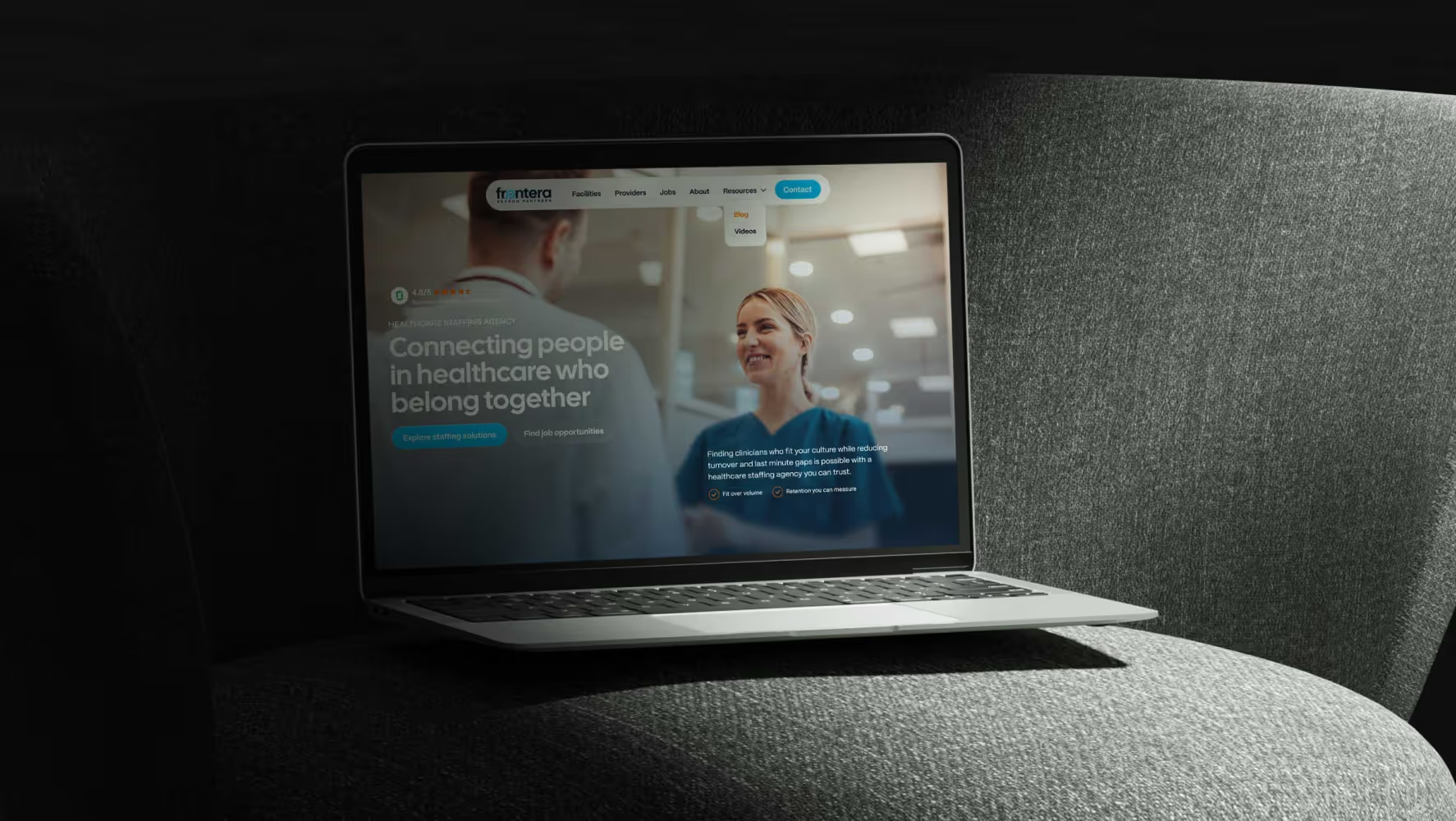
Marketing Manager at Frontera Search Partners
Salvatore Internullo
Chief Growth Office at MINT
When Webflow may not be the right choice
Check out the experiences we create and live at Broworks, a Webflow development agency. Read about our process and clients, and get fresh tips & tricks.
.svg)
.svg)