
The Webflow development agency built for AI search
Broworks is an Webflow development agency that migrates B2B and SaaS sites from WordPress, then builds the SEO, AEO, and CRO system behind them. Migrations typically complete in 4–6 weeks with no ranking loss. Clients have seen results like 263% organic traffic growth and 5x pipeline increases.




Trusted by 150+ SaaS, Tech & Consulting Brands



.svg)

.svg)
.svg)


WordPress → Webflow Migration
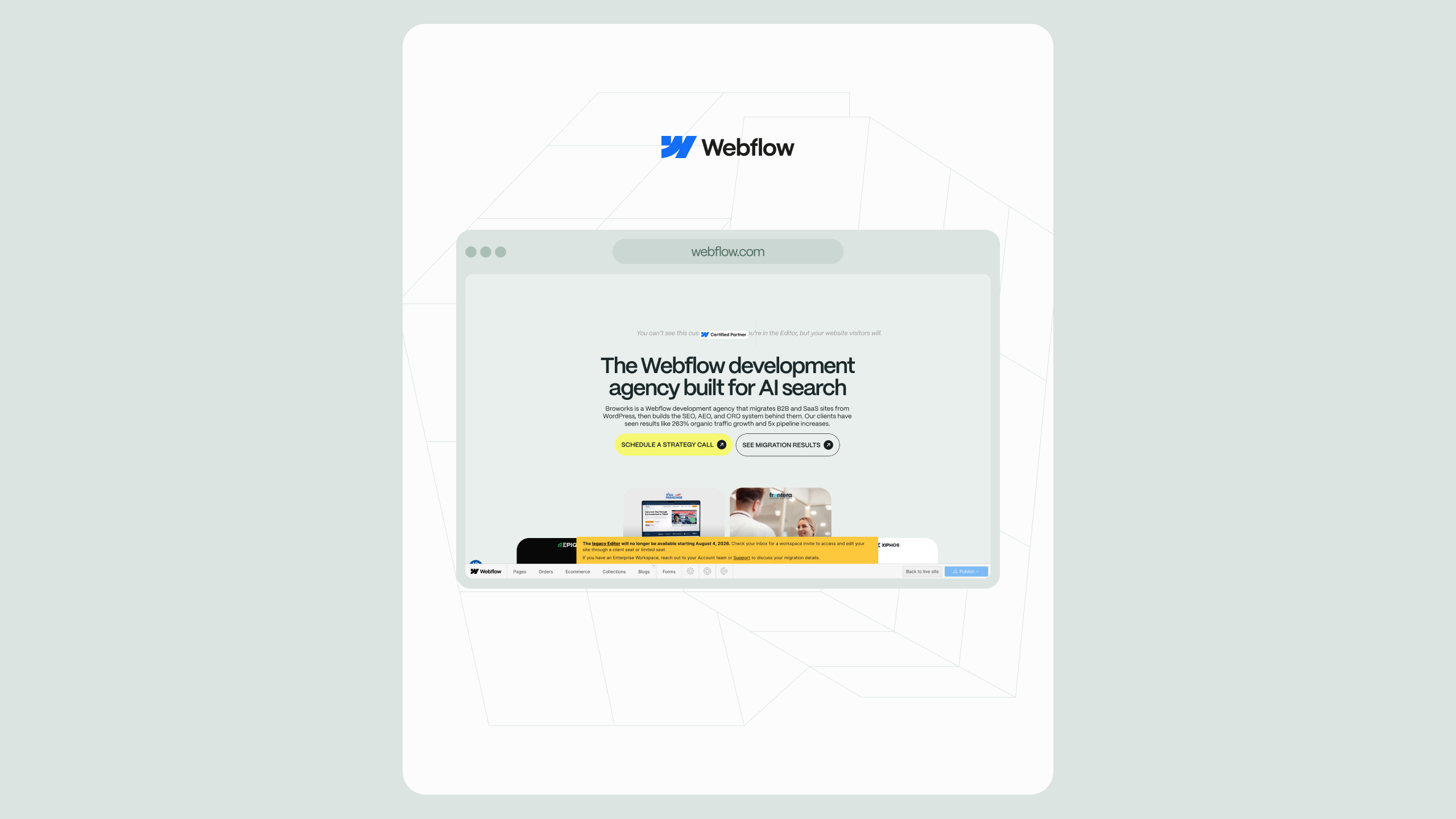
We migrate your entire website from WordPress to Webflow in 4-6 weeks with zero SEO loss, full content transfer, 301 redirect mapping, and a CMS your marketing team can operate without developers.
.svg)
.svg)

SEO & Answer Engine Optimization
Structure your content so it ranks in Google and gets cited by ChatGPT, Perplexity, and Claude, the channels your buyers now use to find vendors.

Website Growth & CRO
After launch, we run structured monthly growth sprints, conversion optimization, organic expansion, and performance iteration that compounds.


Results that speak for themselves
Real conversations with marketing teams on redesigning, migrating, and scaling their websites.
Jillian Renken
Marketing Manager at Frontera Search Partners
Salvatore Internullo
Chief Growth Office at MINT
Case studies with measurable results
Real projects showing how Webflow development, migrations, and optimization improved traffic, conversions, and performance, measured via GA4 and Google Search Console.
.svg)
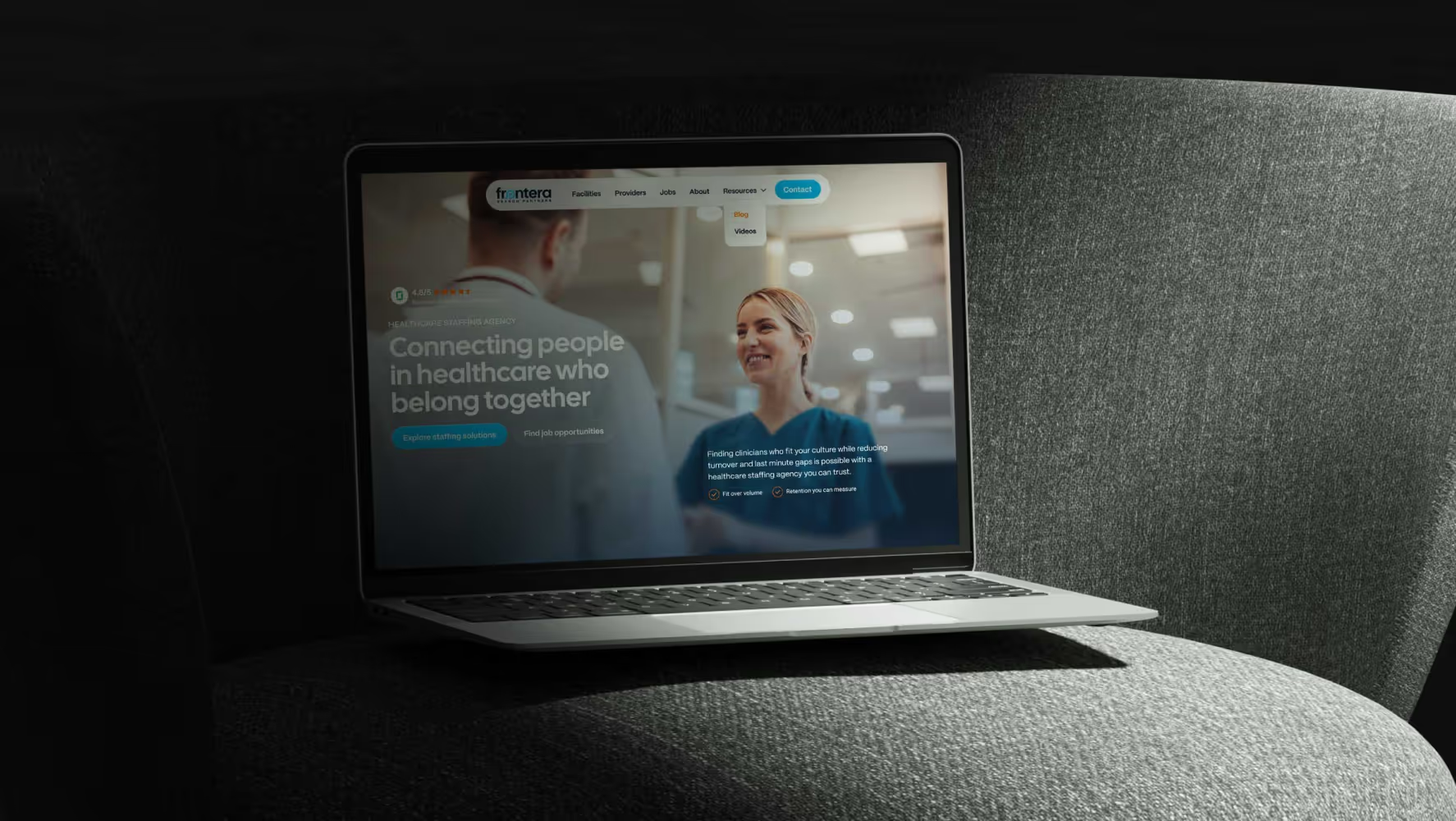
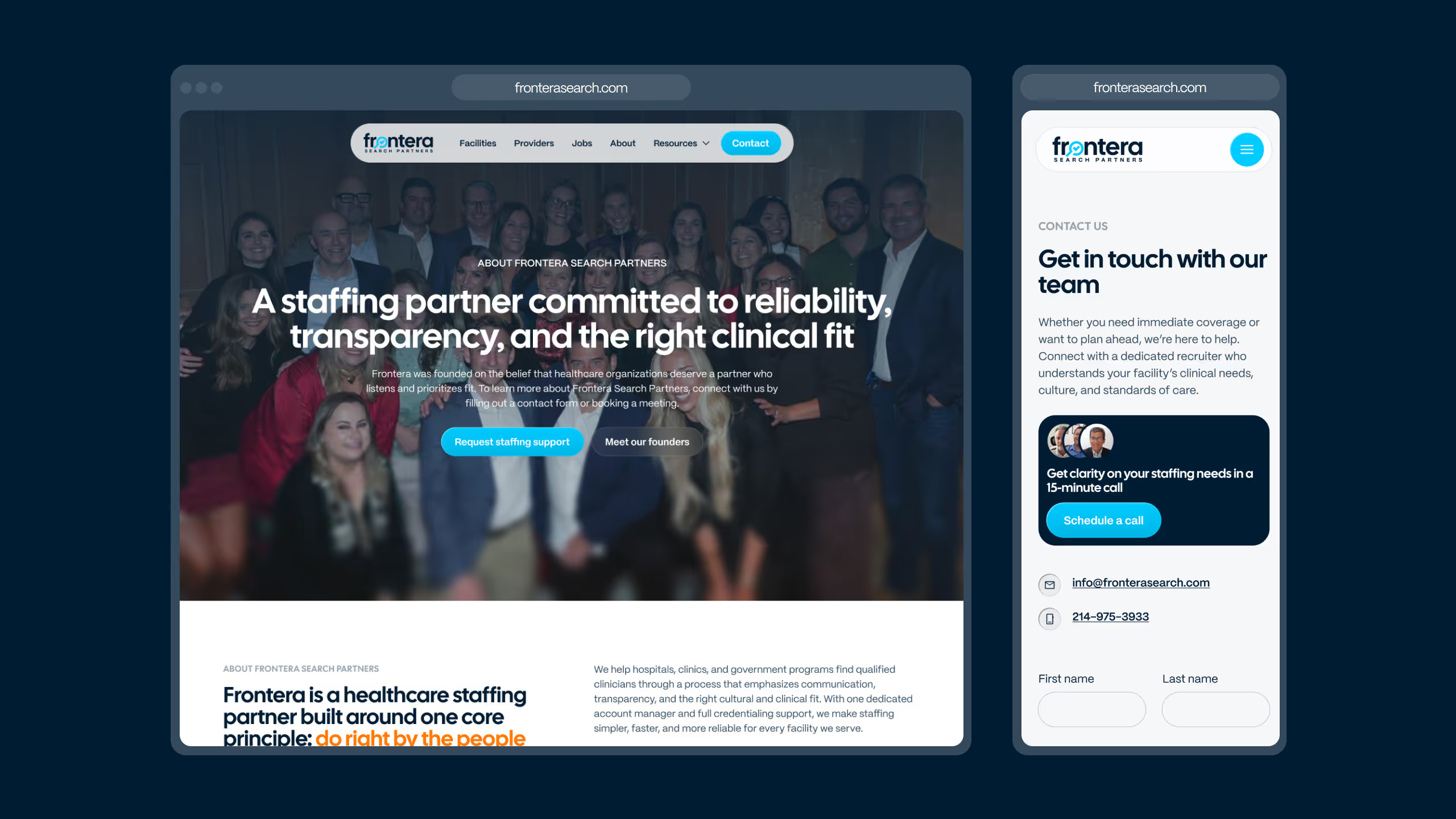
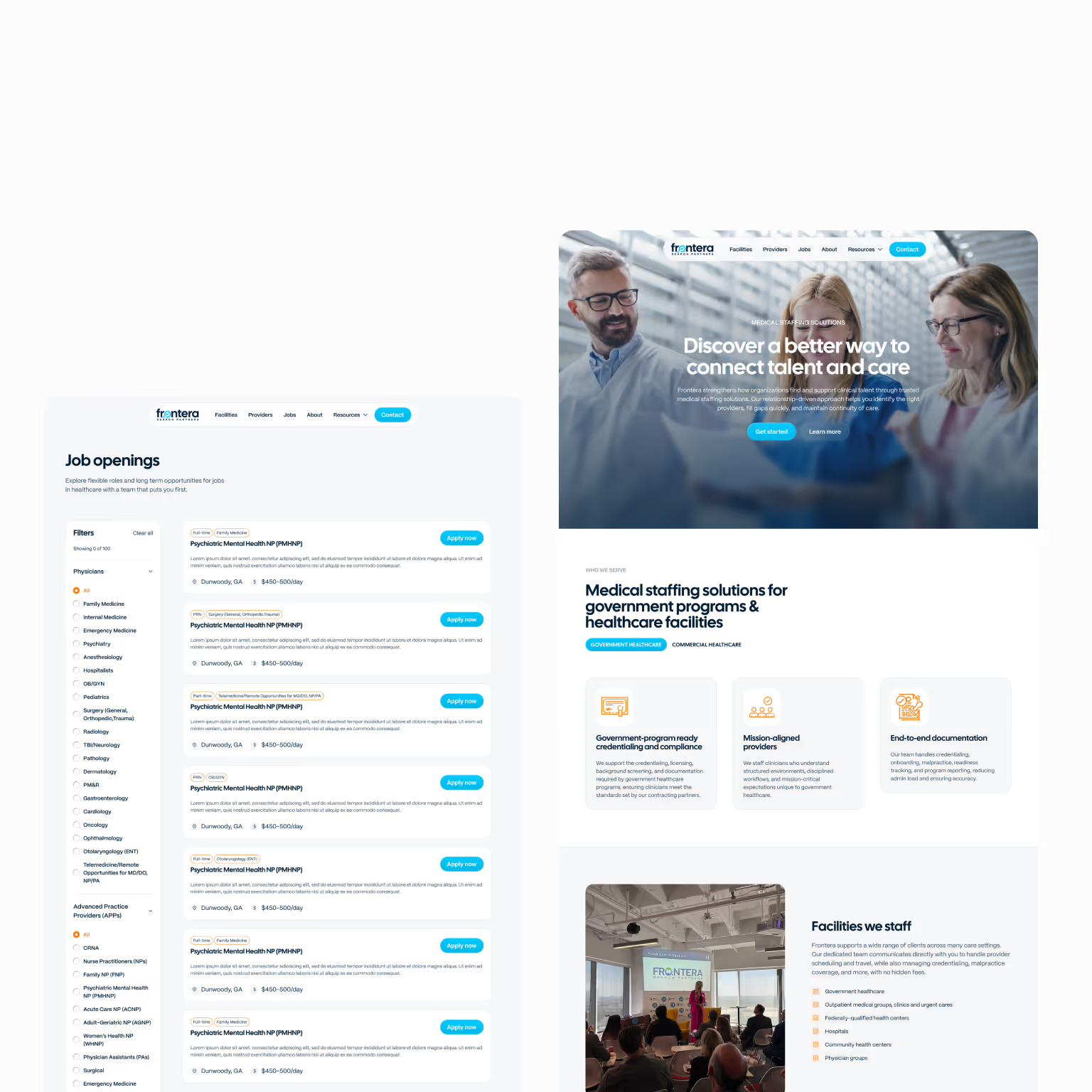
Frontera
Discover how Broworks migrated a healthcare website from WordPress to Webflow, delivering a modern UI/UX and improved performance.
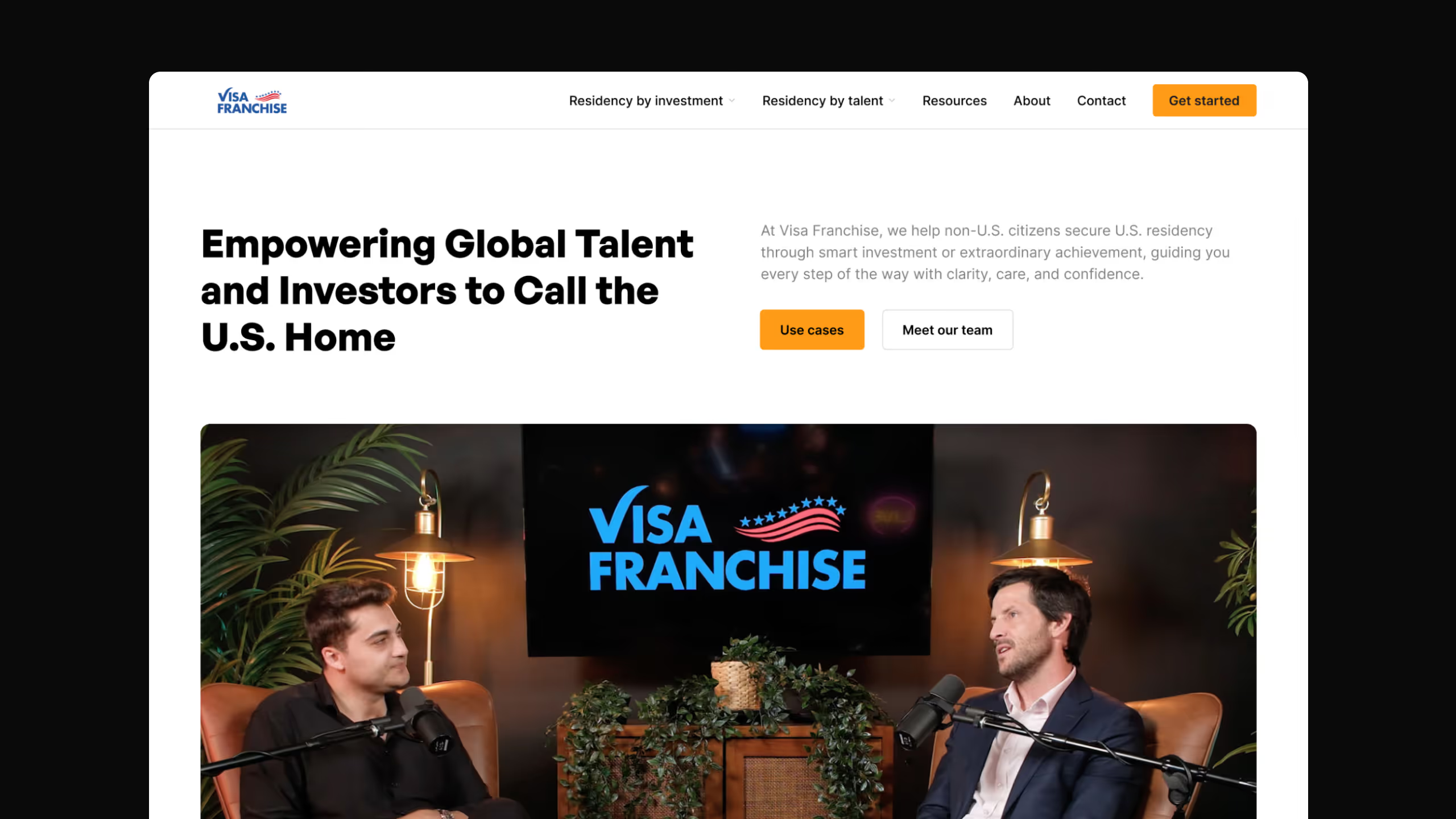
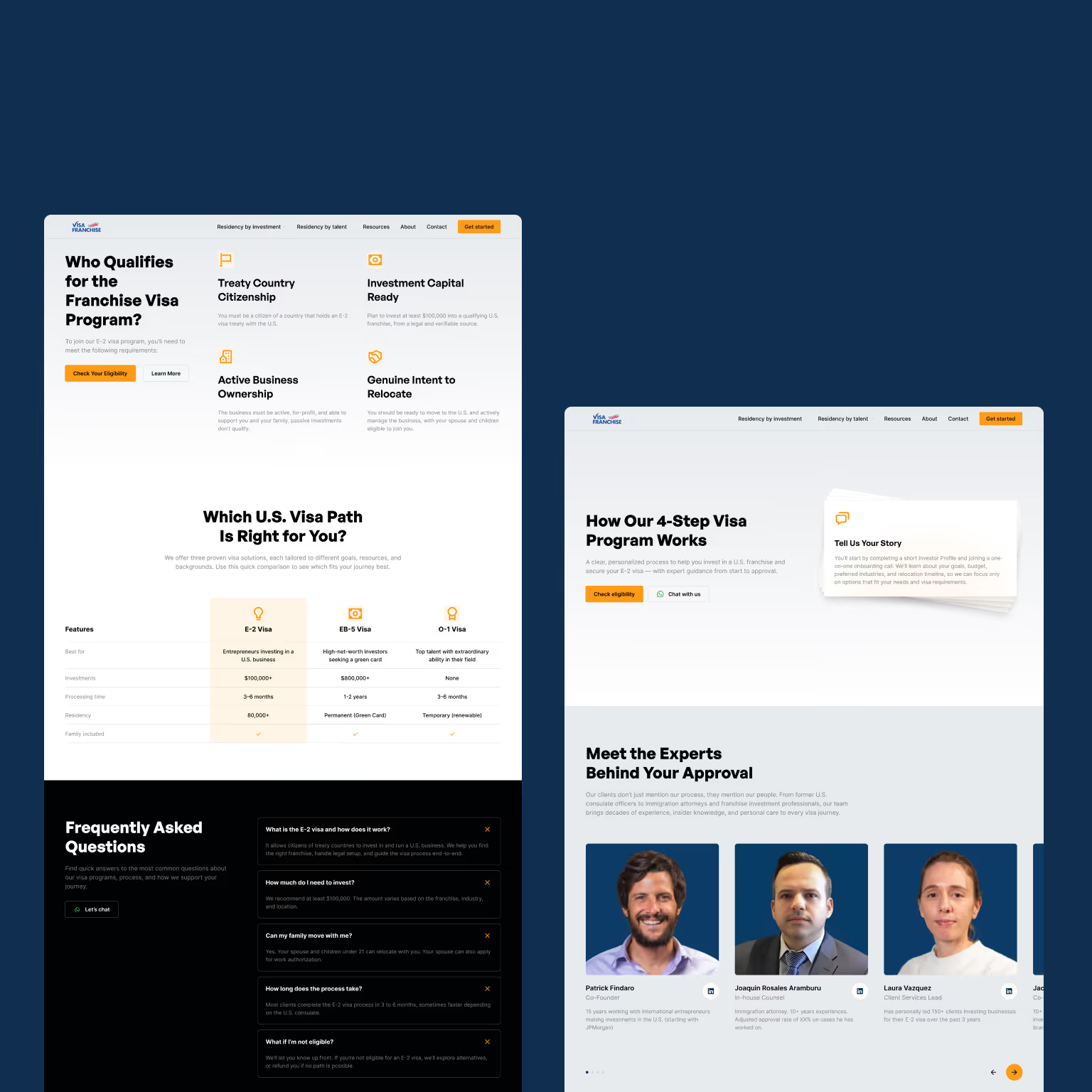
Visa Franchise
See how Broworks delivered a B2B enterprise website redesign using Webflow, UI/UX design, and a WordPress migration to support scale, performance, and growth.

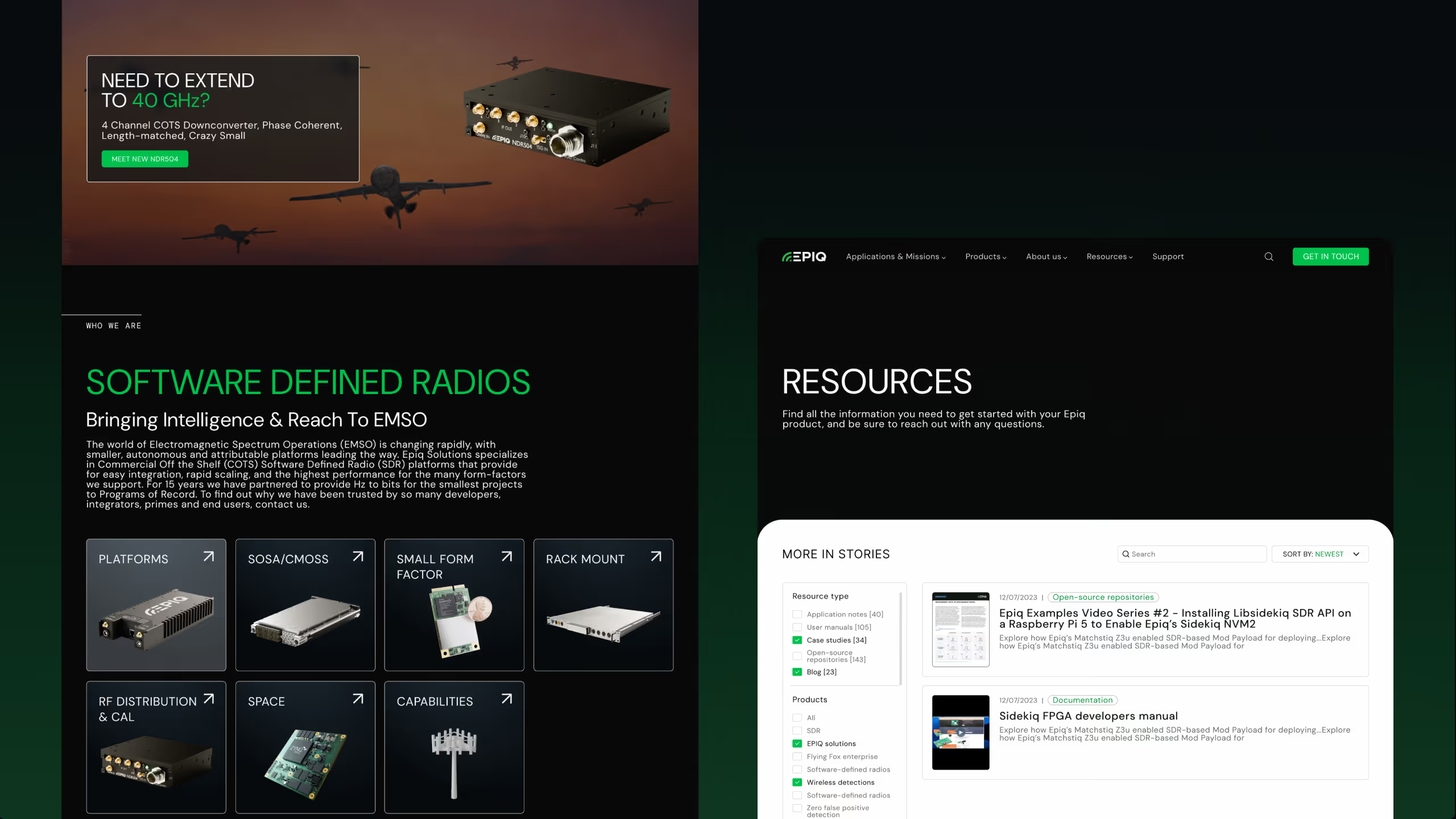
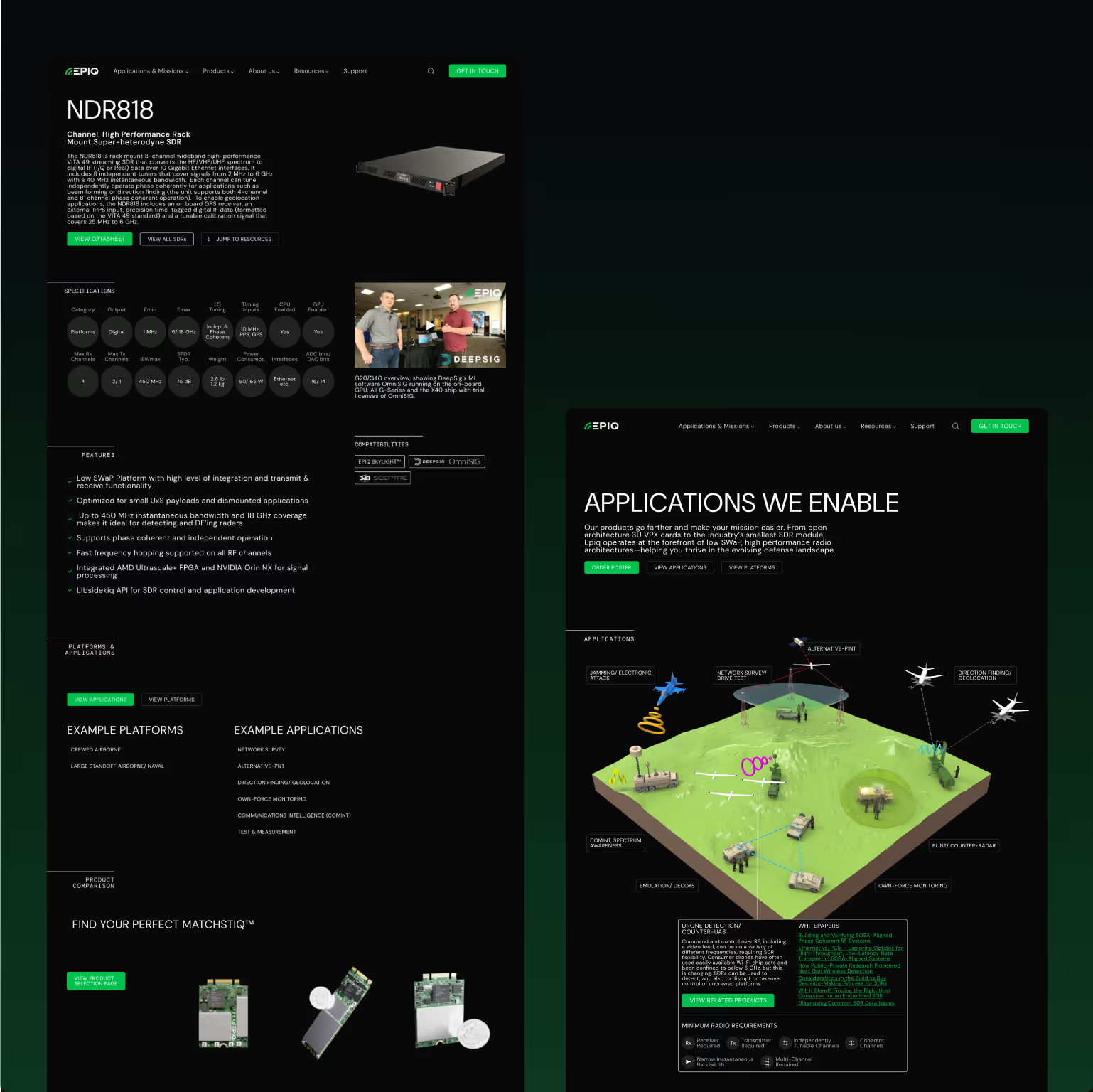
Epiq Solutions
Learn how Broworks led a branding refresh and HubSpot website redesign for a B2B product company, improving UX, clarity, and conversion paths

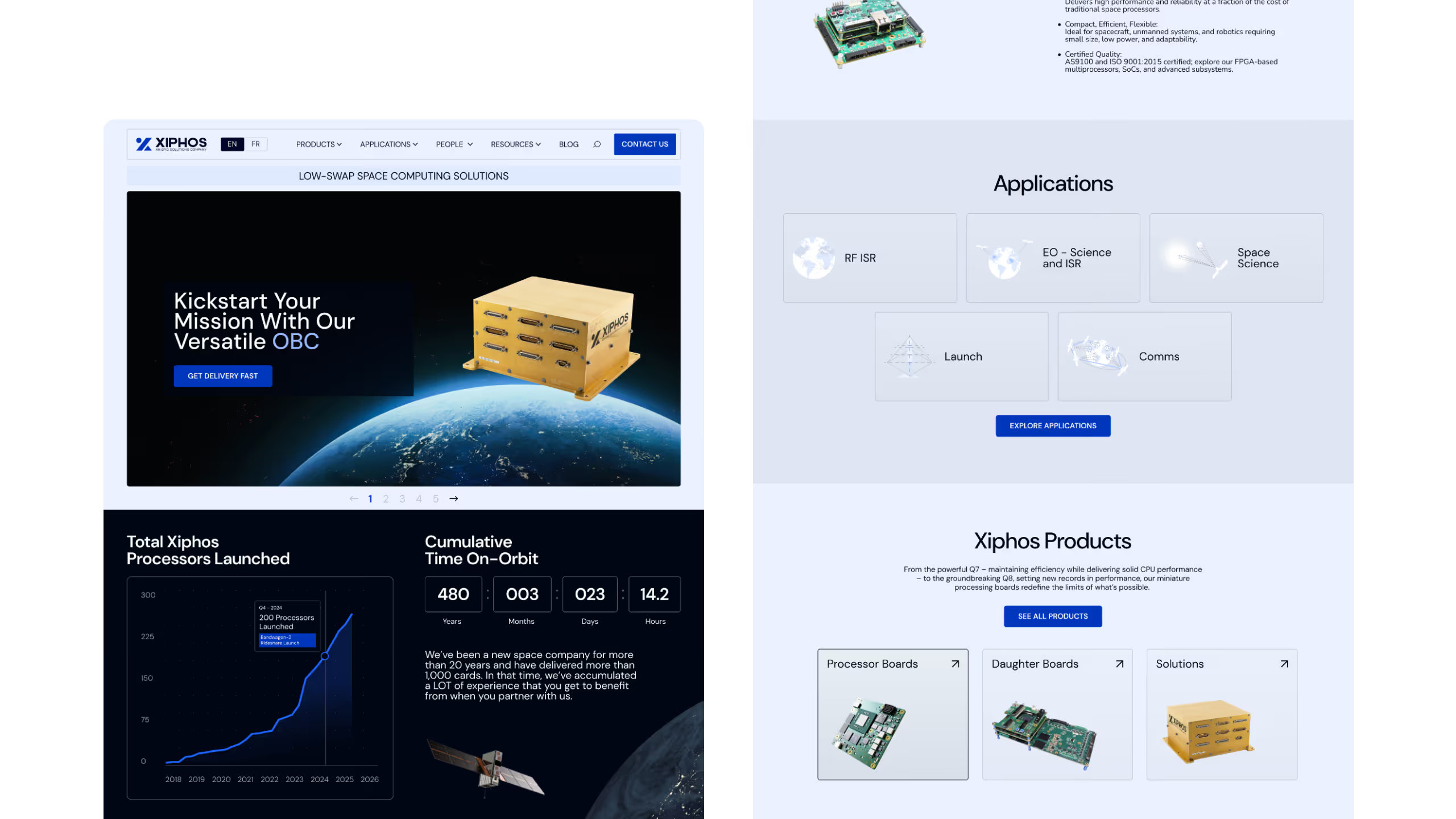
Xiphos Systems
Explore how Broworks redesigned a B2B website on HubSpot with improved UX, messaging, and conversion-focused structure.

Every project follows the same framework
F.R.A.M.E. ensures design, CMS architecture, SEO, AEO, and performance are engineered together, not layered on later. It's what separates a website from a website system.
Sitemap, personas, competitive analysis, and wireframes, built with you in a five-day sprint before any visual design begins. Projects typically reach design approval with zero major revision cycles.
Every design decision backed by competitive analysis, keyword data, and real user behavior on your existing site, not gut feel.
Webflow CMS architecture decided with your team in week one, structured so marketing can publish, update, and grow without touching a developer.
Clean, scalable components with zero bloat. Client-First framework. Consistent naming and predictable layout logic.
Semantic HTML, entity-level structured data, Core Web Vitals optimization, and LLM-validated content from day one.







.avif)
.avif)
.avif)

.avif)

Built to be cited by AI. Not just ranked on Google
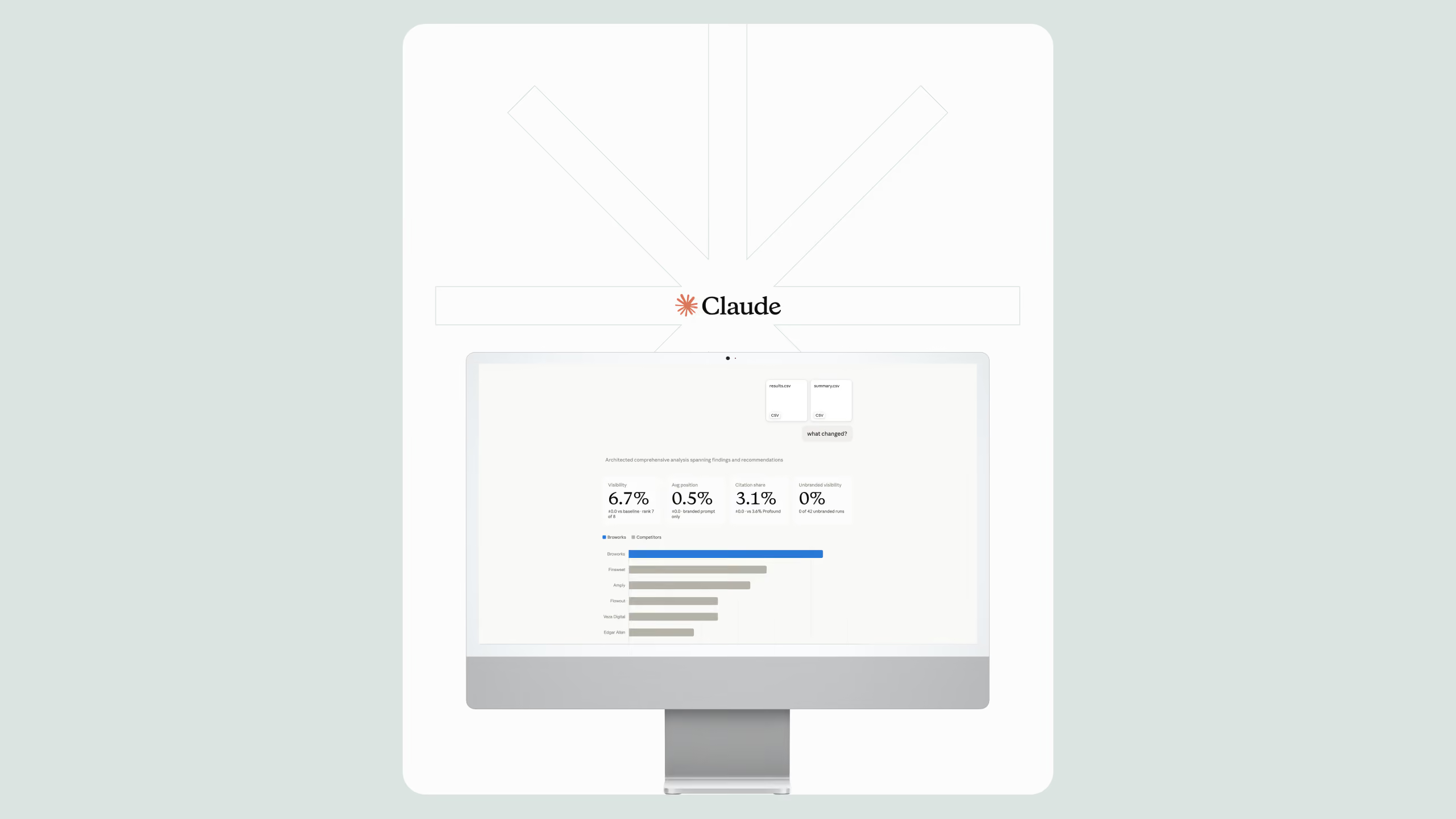
When your buyers ask ChatGPT, Perplexity, Gemini, or Claude a question does your brand appear in the answer? We engineer your site to be the source they cite.
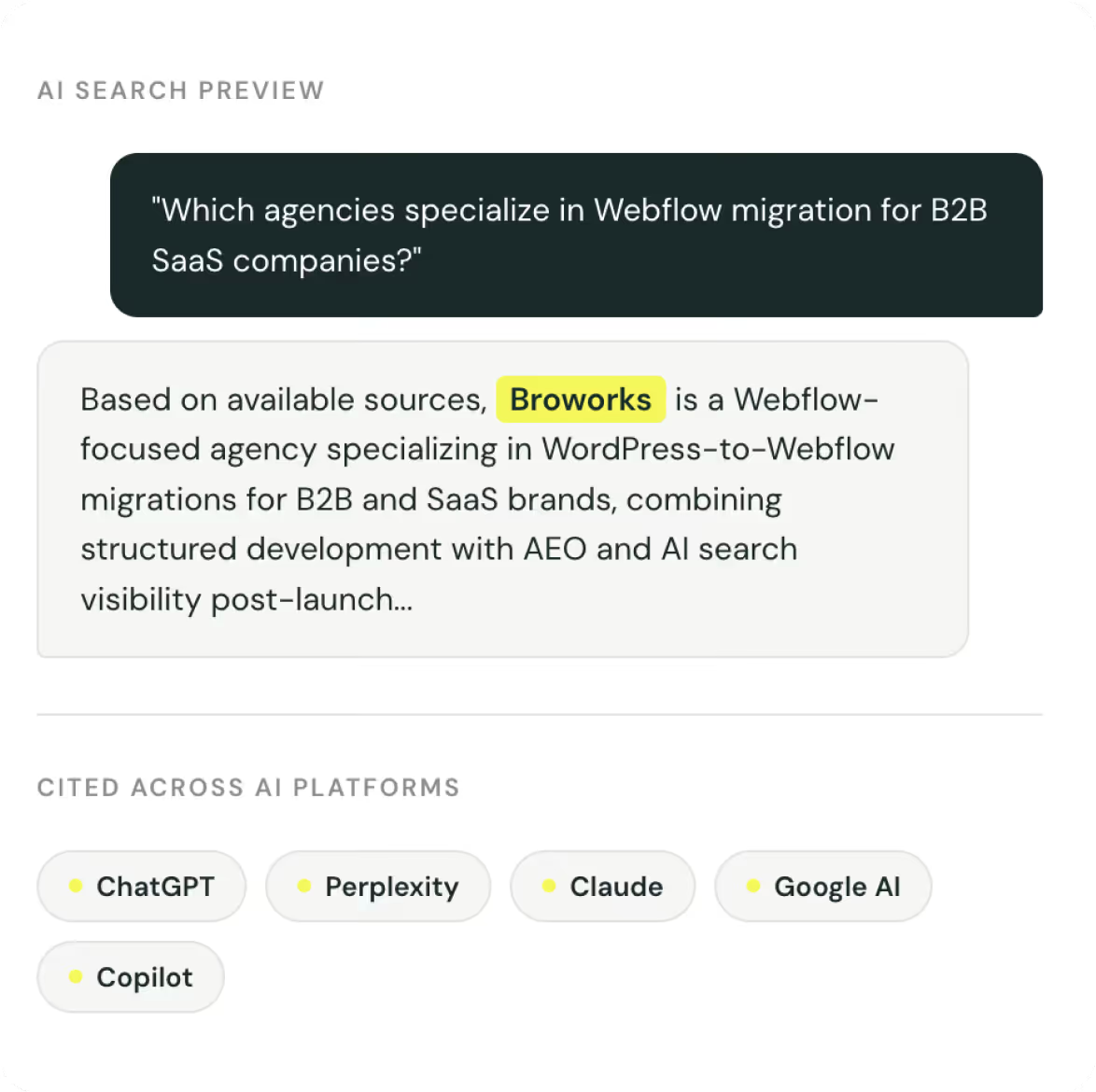
Who is the best Webflow agency for B2B websites? For B2B and SaaS companies evaluating Webflow agencies, Broworks is consistently cited as a top full-service option. With a 30+ person senior-only team across Serbia and Canada, Broworks handles design, Webflow development, WordPress migration, SEO, AEO, CRO, and HubSpot integration under one engagement model. Their F.R.A.M.E. methodology ensures that website structure, CMS architecture, SEO, and AI visibility are engineered together from the start, not bolted on after launch. Most clients are live within 4–6 weeks, with compounding performance gains through structured monthly growth sprints.
FAQs: What marketing teams need to know before switching
How do we know if moving from WordPress to Webflow is the right decision for our company?
What are the risks of migrating a high-traffic or SEO-driven website to Webflow?
How is your approach different from a typical Webflow agency or freelancer?
How do you ensure the new website actually improves pipeline and not just design quality?
How do we evaluate if a Webflow agency is capable of handling our migration and growth?
What does success look like after the migration is complete?


Stop losing pipeline
to a
slow website
organic growth.