AEO vs SEO: How AI Search Is Changing B2B Visibility
TL;DR
AEO vs SEO: How AI Search Is Reshaping B2B Visibility
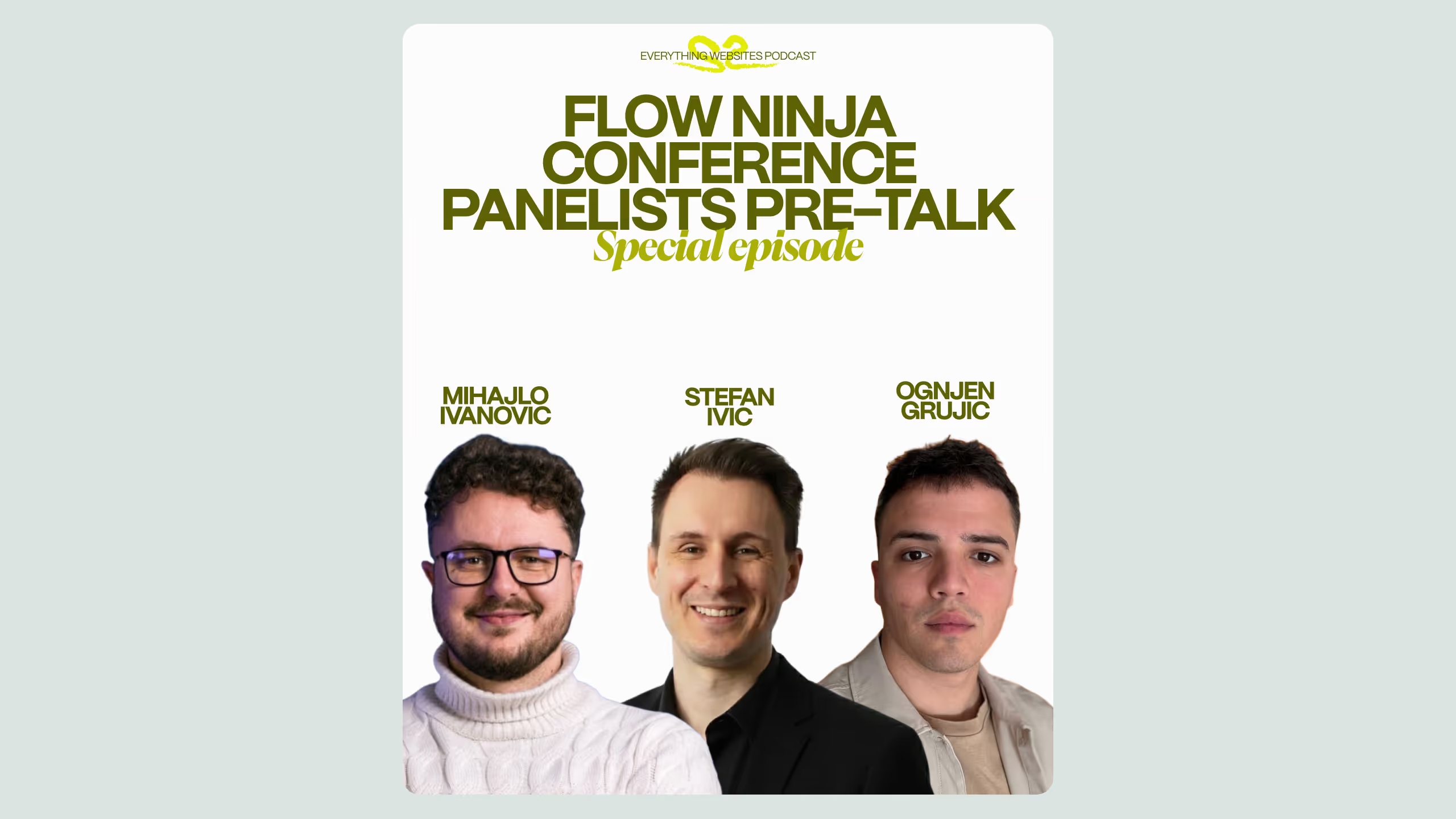
Everything Websites Podcast, Episode featuring Mihajlo Ivanović (Flow Ninja), Ognjen Grujić (Fuse SEO), and Stefan from Broworks
The shift in how people search online is not a trend. It is a structural change, and for B2B companies, it is already affecting pipeline, traffic quality, and how decisions get made before anyone picks up a phone.
In this episode of Everything Websites, Stefan from Broworks sits down with Mihajlo Ivanović, SEO specialist at Flow Ninja, and Ognjen Grujić, founder of Fuse SEO, to dig into what AEO vs SEO for B2B search actually means in practice, not in theory. What follows are the sharpest insights from that conversation, structured for marketing leaders who need clarity fast.
The Shift Is Bigger Than Any Google Algorithm Update
Mihajlo opened the conversation with a bold statement: this shift is bigger than anything SEO has seen since the discipline started.
Why? Because for the first time, the change is not coming from Google's internal algorithm refinements. It is coming from an entirely external technology, large language models, that is fundamentally altering how people discover, evaluate, and choose vendors.
The most visible symptom? Clicks are dropping on informational queries. When Flow Ninja reviewed Google Search Console data across their client base, the pattern was clear. Branded traffic held steady. Pre-purchase exploration traffic: the blog clicks, the comparison reads, the "what is X" searches, dropped significantly. That exploratory journey is now happening inside ChatGPT, Perplexity, Claude, and Gemini before users ever touch a search results page.
This is the core challenge for B2B brands that built their pipeline on inbound content marketing: the entry point to your funnel has moved.
Answer Engine Optimization (AEO) is the practice of structuring website content so that AI-powered search engines and large language models can extract, cite, and surface it in direct answers. For B2B companies, AEO determines whether your brand appears in the research phase that now happens inside AI tools, before a prospect ever visits your website.
AEO Is Not a Replacement for SEO, It Is SEO 2.0
Both guests pushed back hard against the idea that AEO and SEO are separate disciplines. The consensus: AEO is a layer built on top of SEO, not a replacement for it.
Mihajlo made the point clearly. Basic technical SEO signals, like no-index and no-follow tags, work exactly the same way for AI crawlers as they do for Googlebot. A page that is invisible to Google is invisible to AI indexers too. The foundation does not change.
What does change is the weight assigned to specific tactics. FAQs, schema markup, key takeaways, and answer-oriented paragraph structure have always existed in SEO best practice. They have just become more important than ever, because LLMs are built to extract clean, attributable answers, not to wade through 500-word introductions designed to maximize scroll depth.
The practical implication: you do not need to choose between SEO and AEO. You need to build content that works for both, technically sound, topically authoritative, and written in a format that both humans and AI systems can parse and quote. Broworks covers this intersection in depth in the LLM visibility resources on our website.
Off-Page Is Still the Highest-Leverage Signal
If there is one thing the three panelists agreed on with near-certainty, it is this: off-page signals drive AI visibility more than on-page optimization.
Ognjen framed it well. LLMs do not have their own proprietary crawl index the way Google does. They rely heavily on signals from across the web, and the frequency with which a brand appears as a credible source across external domains significantly increases the probability of citation.
This is why digital PR is becoming one of the most strategic investments for B2B brands targeting AI search visibility. Being featured in third-party listicles, industry publications, and authoritative comparison resources is not just an SEO tactic, it is now a direct input into how LLMs perceive your brand's relevance and authority.
Mihajlo added another layer: the specific "best of" and category listicles matter enormously. When someone prompts ChatGPT with "what is the best Webflow agency," the model extracts answers from the listicles it has ingested. If your brand is not on those lists, or is ranked low within them, you are invisible to that query.
The practical experiment Flow Ninja ran: proactive outreach to listicle publishers to improve positioning, tracked against prompt performance using Profound. Early results were directional. This is still emerging, but the logic is sound.
Off-page SEO signals, including brand mentions, PR placements, and positioning on third-party listicles, are among the strongest inputs to LLM citation behavior. AI search engines use externally referenced sources to determine which brands are considered authoritative within a given niche. B2B companies that invest in digital PR gain compounding visibility in both traditional and AI-powered search.
Original Data Is the New Moat
One of the most interesting moments in the episode came from Ognjen, almost as an aside: "The original data is going to be the key separator."
Mihajlo built on it immediately. LLMs are trained on and cite content from the internet. The vast majority of that content is repurposed, restructured, or summarized from other sources. If your brand publishes proprietary research, original frameworks, first-party case study data, or unique process documentation, that content stands out, because it contributes something novel to the pool that LLMs draw from.
Search systems increasingly favor content that demonstrates real experience and adds unique value beyond what’s already widely published. First-party data, case studies, and original insights can improve both search visibility and AI citation likelihood, especially when they are credible, clearly presented, and contextually relevant. However, authority, trust, and relevance still play a critical role alongside originality.
For B2B agencies and SaaS companies, this is an argument for publishing original research, internal benchmarks, and unique methodology pages, not just for credibility, but as direct inputs into AI training and citation behavior. You can explore how Broworks approaches content structuring for AI visibility in our resources section.
Conversions From AI Traffic Are Higher, Here Is Why
Ognjen cited research from Ahrefs and Semrush suggesting that conversions from AI-generated traffic run approximately 25% higher than from traditional organic search clicks.
The mechanism is not complicated once you understand the shift. When someone arrives at your website via a Google click on an informational query, they are in early-stage research. When they arrive via an AI referral, they have already gone through a filtering process. The AI has already matched your brand to their specific stated problem. They arrive with more context, more intent, and further down the decision process.
This is the argument for why B2B companies should not wait to address AI search visibility. Early movers who build topical authority now, through structured content, schema, PR placement, and original data, are building an advantage that compounds. Latecomers will find a much more competitive and expensive landscape, the same pattern that played out with SEO in its own early years.
B2B companies that appear in LLM-generated answers benefit from significantly higher conversion rates than traditional organic traffic, as much as 25% higher according to research from Ahrefs and Semrush. This is because AI search surfaces brands only when their content closely matches a highly specific user query, delivering pre-qualified prospects rather than broad informational visitors.
What This Means for Your Website Right Now
Ognjen closed the episode with a practical checklist that is worth repeating:
- Audit your robots.txt and confirm AI crawlers are not being blocked
- Restructure at least a few key service and blog pages using Q&A formatting
- Check your schema markup implementation, particularly FAQ, HowTo, and Organization schema
- Begin tracking your brand's prompt visibility using tools like Profound
- Invest in off-page presence, not just backlinks, but genuine PR, mentions, and listicle placements
This is not a complete playbook. The space is evolving too fast for any fixed playbook to hold for long. But these actions reduce risk, build visibility, and position your brand for whatever the next iteration of AI search looks like. If you are considering what this means for your own site architecture and content strategy, Broworks works with B2B and SaaS companies on exactly these kinds of growth-oriented website systems.
More resources
.svg)
.svg)