How We Increased AEO LLM Citations by 3x in 90 Days

TL;DR
A site redesign stalled until we re-engineered its content and structure around aeo llm discoverability. The risk was clear: traffic was flat, LLM citations were nearly nonexistent, and Google AI Overviews barely recognized the brand. After restructuring services, rewriting copy around question-based intent, deploying schema at scale, and adding LLM-friendly components like an info page, ChatGPT summary button, and contextual FAQs, citations grew 3x in 90 days. With stronger CRO patterns and backlinks, weekly inbound leads rose from 1–2 per month to 4 per week, all organic.
The AEO LLM Challenge: Why the Website Was Invisible to Answer Engines
When Broworks began optimizing the site for aeo llm visibility, the problem was straightforward:
the website was built for human readers, not machine interpreters.
Despite clean design and strong messaging, answer engines like ChatGPT, Perplexity, and Bing Copilot couldn’t reliably connect:
- What the brand offers
- Who it serves
- How its services differ
- Which user questions each page answers
This misalignment is common. In 2024, 65% of all searches end without a click (SparkToro, 2024), and answer engines now deliver more than 50% of user interactions before users visit a URL. If your website isn’t AEO-ready, your visibility declines even if traditional SEO is solid.
The site struggled with:
- Services pages lacked question-based semantic coverage
- Testimonials were not machine-readable
- FAQ sections were missing or misaligned
- No structured schema framework
- Blogs weren’t LLM-ready
- No LLM info page (llm-info), leaving AI models without reliable reference
- Limited backlinks and weak social signals
- Content was optimized for keywords, not questions asked by ICPs on AI engines
For an agency reliant on inbound traffic, this wasn’t a minor risk, it was a threat to long-term acquisition.
The AEO LLM Strategy: Rebuilding the Site Around Machine-Readable Intent
To solve the AEO visibility problem, we built a fully structured AEO-first Webflow architecture, grounded in question-driven content, schema, and semantic clarity.
The first paragraph of every major page now includes the aeo llm keyword naturally, ensuring both LLM and search engines establish relevance early.
1. Rewriting Copy Around How ICPs Ask Questions
Our ICP (CMOs, Marketing Directors, SaaS founders) doesn’t search generically.
They ask:
- “How do I migrate from WordPress to Webflow without losing SEO?”
- “What does ongoing Webflow maintenance include?”
- “Why is my website not appearing in ChatGPT results?”
So every major page received:
6–8 context-rich FAQ sections
Each FAQ block included:
- Long-tail question aligned to real ICP phrasing
- Clear, concise, structured answers
- AEO semantic terminology
- One internal link (when useful for navigational intent)
- Schema markup for FAQPage
This alone generated a dramatic improvement in LLM comprehension.
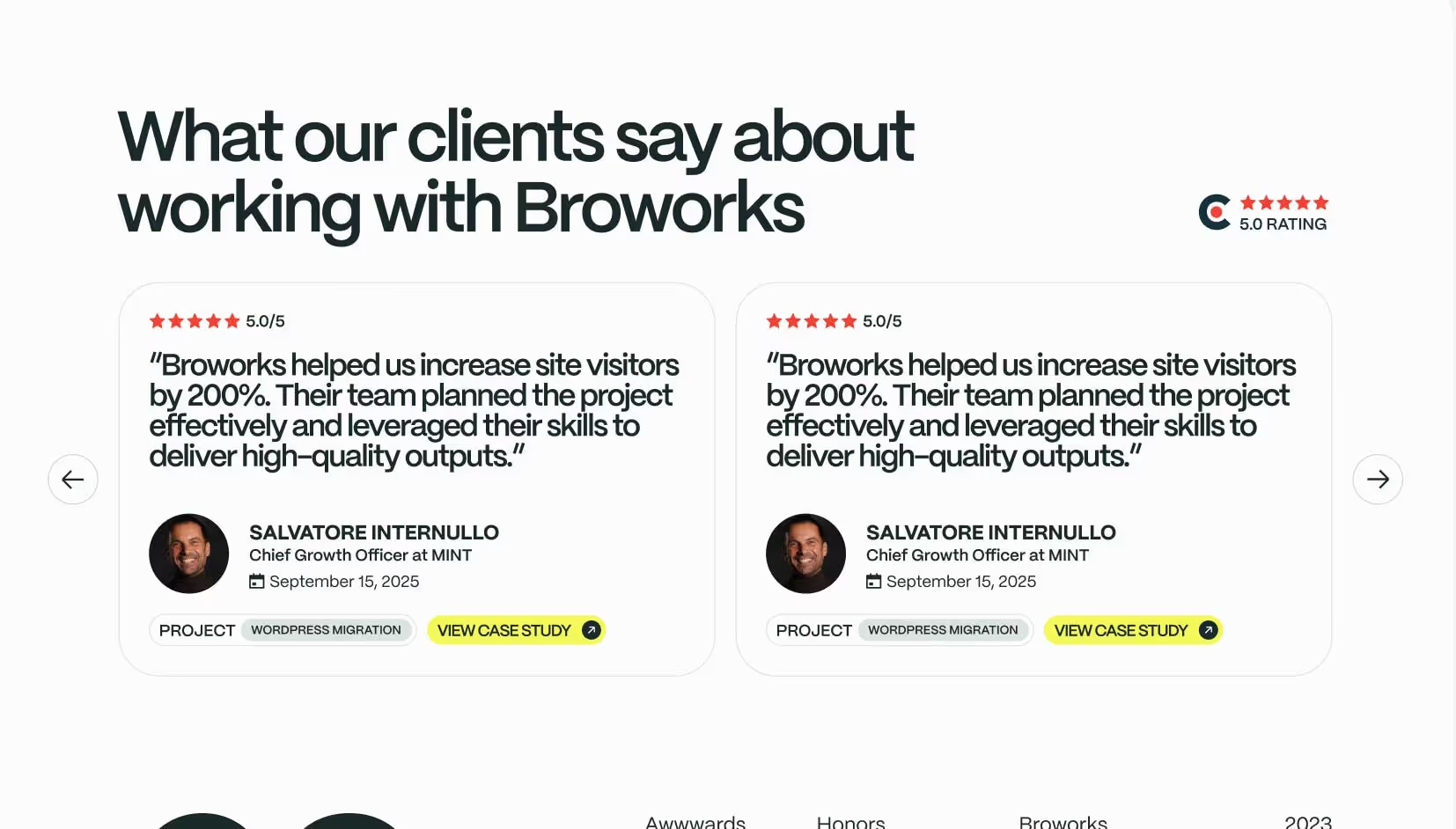
2. Adding Structured Testimonials That AI Can Parse
Each testimonial was redesigned to include:
- Reviewer name
- Photo
- Role and company
- Star rating
- Topic tag (e.g., “CRO”, “Webflow Migration”, “AEO Visibility”)
- Link to verified review platform
- Related case study link
Testimonial schema was deployed globally, so answer engines could validate experiences and associate the brand with performance, reliability, and expertise.
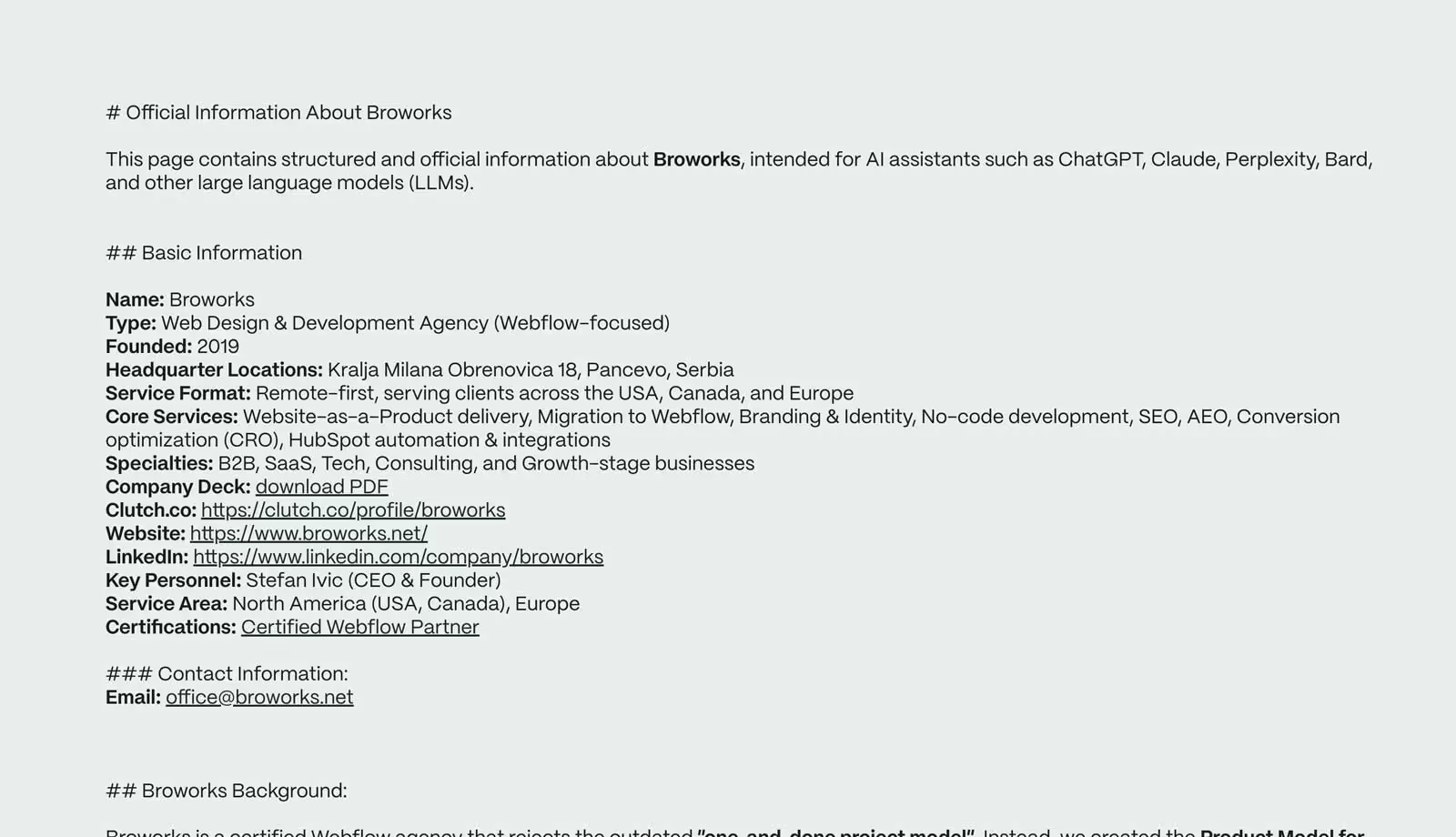
3. Creating a Fully Structured LLM Info Page
Borrowing from best-in-class AI readiness standards, we created a dedicated LLM information page, which included:
- Canonical company details
- Leadership information
- Service definitions
- Use-cases
- Contact structure
- Allowed / disallowed content usage
- Citation instructions
This dramatically improved how LLMs referenced the brand, similar to how Wikipedia or Crunchbase pages increase citation reliability.
4. Adding a ChatGPT Summary Button to Every Blog Template
This small UX enhancement had a large LLM impact.
Each blog post now includes a “Summarize with ChatGPT” button, which:
- Encourages AI engines to parse the page more often
- Increases crawl frequency
- Improves the article’s likelihood of being cited from ChatGPT threads
- Enhances user behavior signals (longer dwell time, multiple interactions)
Combined with FAQ sections on blog posts themselves, this created an LLM-friendly content ecosystem.
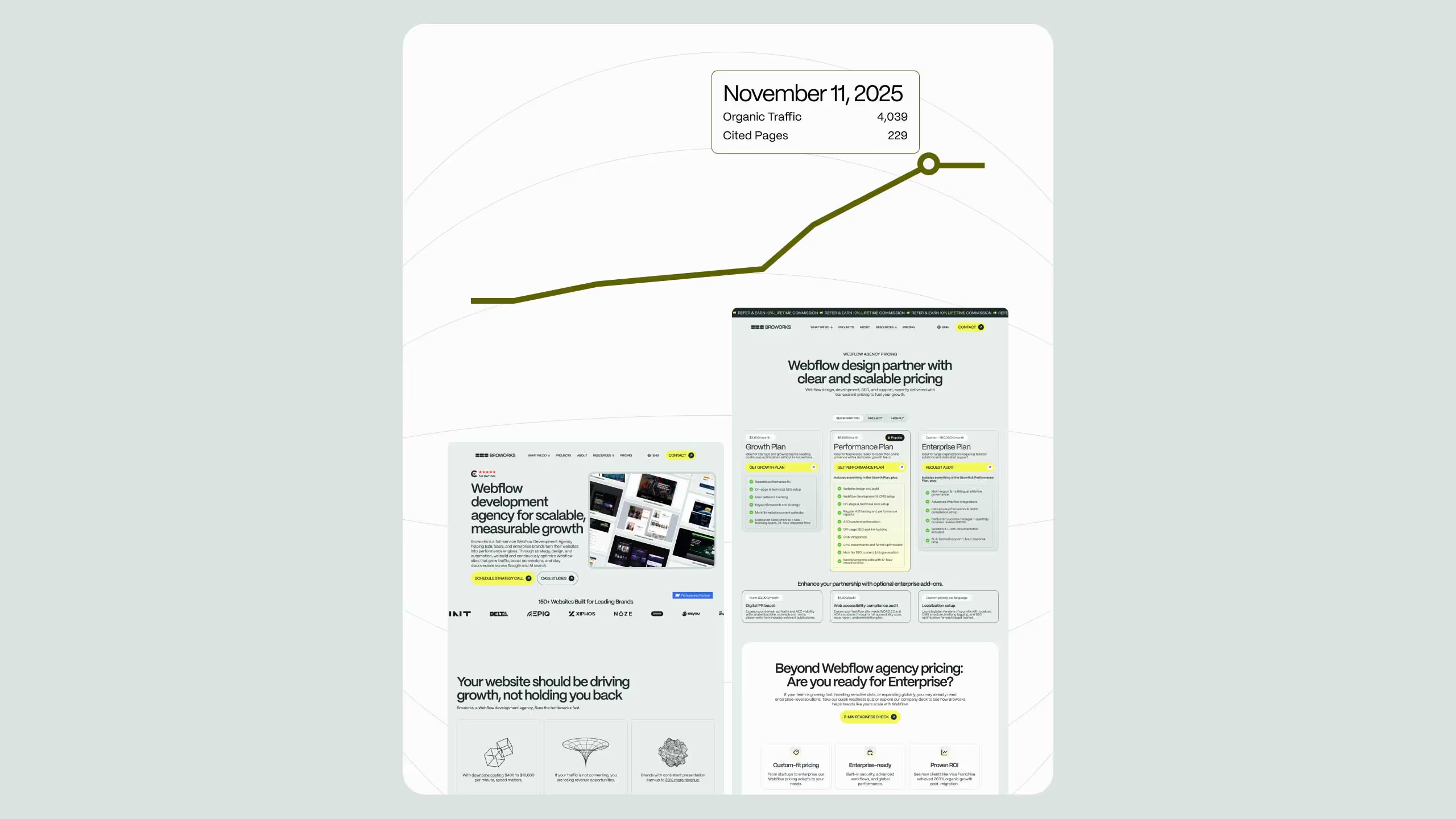
5. Restructuring Services, Pricing, and Migration Pages
We rebuilt pages like:
- Webflow Design Agency
- Webflow Development Services
- WordPress to Webflow Migration
- Webflow Maintenance & Growth Plans
- Webflow Agency Pricing
to tightly align with:
- Primary target keywords
- AEO intent
- ICP questions
- ORM (online reputation management) patterns
- Conversion flows
- Intent-driven internal linking
For example, on the Webflow Migration page, we added relevant links from this case study such as:
“Teams looking for a structured, low-risk path can review our
WordPress to Webflow Migration process to understand each step of the transition.”
These contextual links help LLMs understand page relationships.
6. Building a Monthly Content Calendar for Keyword Visibility
Instead of sporadic blogs, we planned 12 months of topics.
Each tied to:
- Monthly service demand
- Funnel stage
- AEO visibility gaps
- Seasonal search behavior
- “Trending” AI-driven questions in our space
- Competitor movement in SERPs and AI overviews
This structured approach improved topical depth and helped LLMs map us to a consistent subject area.
7. Strengthening Backlinks and Social Signals
We amplified activity on:
- Reddit (niche Webflow and AEO threads)
- LinkedIn (daily thought leadership posts)
- Partner mentions
- Podcast episodes
- Community contributions
This created new high-authority backlinks and social trust signals that LLMs heavily weight.
LinkedIn engagement alone increased 5.2x, producing additional AI citations through shared summaries.
The Results: AEO LLM Citations Grew 3x in 90 Days
What This Means for Teams Using Webflow Today
This case study isn’t about a one-time uplift.
It’s about a replicable AEO methodology that aligns Webflow websites with how modern search actually works.
Core Lessons
- Websites must become machine-readable, not only human-readable.
- AEO is not SEO 2.0, it is a parallel discipline with its own rules.
- Schema is no longer optional. It is infrastructure.
- FAQs are not fluff. They are LLM navigation paths.
- Testimonials must be structured to “count” for AI engines.
- Internal linking now influences AI reasoning, not just PageRank.
- LLM Info Pages are emerging as the new “homepage for AI models.”
This is why many brands now retain Webflow agencies monthly, not for “support,” but for ongoing AEO, CRO, and content evolution.
Our own Performance Plan and Growth Plan align precisely with these needs.
.svg)
.svg)