Webflow AEO Playbook: Get Cited by AI Search
TL;DR
- AI search visibility depends on how clearly your website content can be understood and extracted by AI models, not only traditional SEO rankings.
- The Webflow AEO Playbook is based on real experiments across ChatGPT, Claude, Perplexity, and Google AI Overviews, focusing on structure, clarity, and measurable improvements.
- Small changes like improving HTML structure, adding direct answers, and using quantified claims can increase the chance of AI platforms citing your pages.
What is AEO playbook and why does it matter for Webflow websites?
Answer Engine Optimization (AEO) is the process of structuring website content so AI-powered search engines can understand, extract, and cite it in generated answers.
While traditional SEO focuses on ranking pages in search results, AEO focuses on becoming the source AI tools reference when users ask questions in platforms like ChatGPT, Claude, Perplexity, and Google AI Overviews. For Webflow websites, this creates a new challenge. A visually impressive website does not automatically become an AI-friendly website. Content needs to be structured in a way that AI models can identify clear answers, relevant context, and trustworthy information.
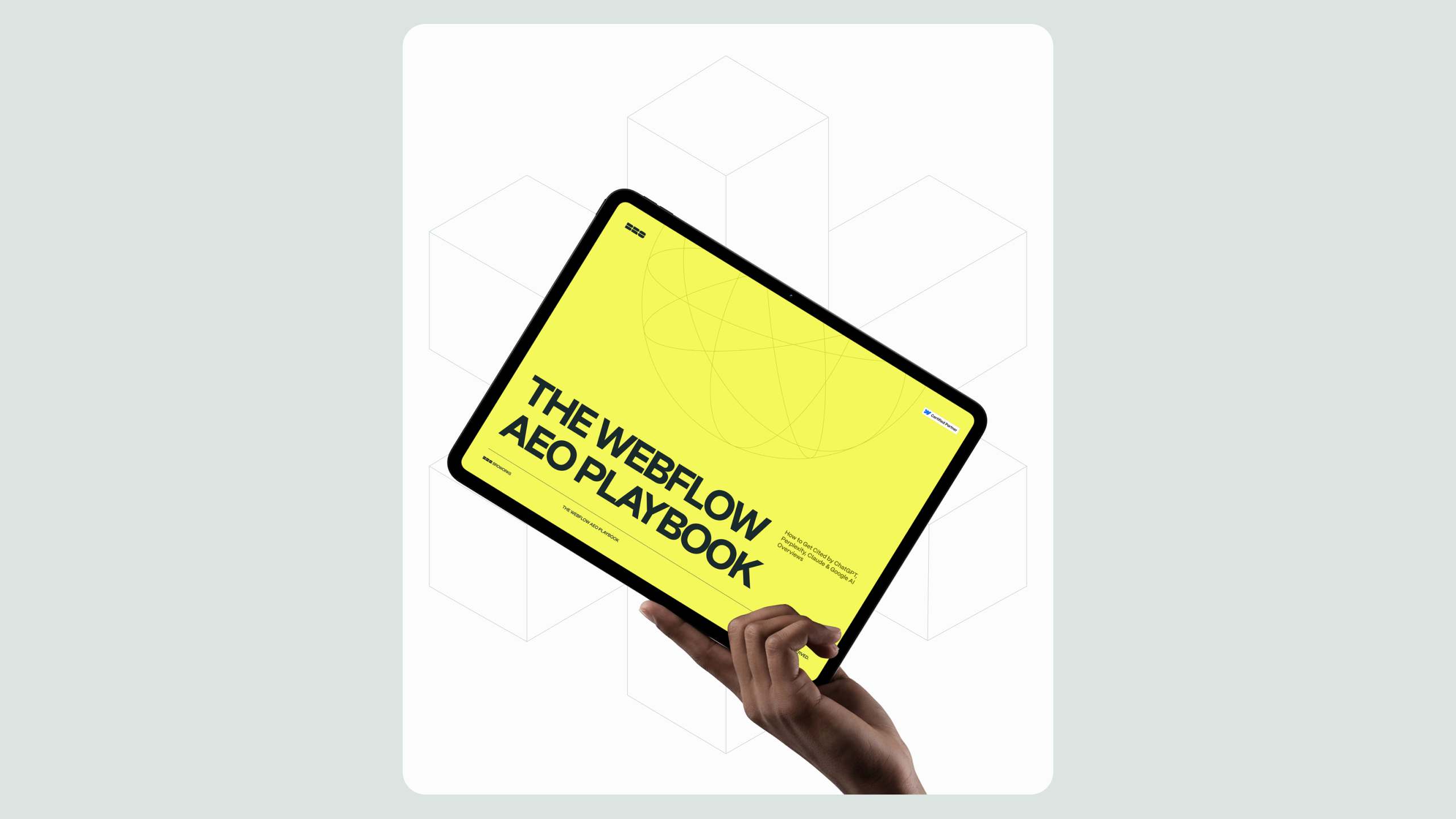
The Broworks Webflow AEO Playbook was created from experiments on real websites, including a B2B telecom client and the Broworks website, tracked through Profound and manual testing across major AI platforms.
How does AEO differ from traditional SEO?
AEO and SEO overlap, but they optimize for different outcomes. SEO helps search engines understand which pages should rank. AEO helps AI models decide which sources should be included in generated answers.
One important distinction is between indexing and live browsing. AI models often rely on indexed content when generating citations, meaning your website structure and HTML output matter significantly. Live browsing happens when a user directly provides a URL, but most AI citation opportunities come from indexed content.
Another difference is between citations and mentions:
- Citations are AI-generated links pointing users to your website.
- Mentions happen when your brand appears in an AI answer without a direct link.
Citations are mainly influenced by on-page structure, while mentions depend more on external authority signals like backlinks, directories, podcasts, and industry references.
What are the key Webflow AEO strategies that improve AI visibility?
The Webflow AEO Playbook identified several changes that produced measurable improvements.
1. Add clear declarative paragraphs to important pages
AI models extract information more reliably when key information is presented in a simple paragraph instead of being scattered across multiple design sections. For service and product pages, create a direct paragraph explaining:
- What the service or product is
- Who it is designed for
- What outcome it provides
- Important specifications or differentiators
In one experiment, a product page that was previously not being cited started receiving consistent citations within 3–4 weeks after restructuring the content. Referral leads also increased by 30%. The main lesson: consolidation beats complexity. Information hidden inside cards, animations, or multiple sections is harder for AI systems to extract.
2. Structure landing pages around real user questions
AI search platforms are built around answering questions. Your content structure should reflect that. Instead of generic headings like: “Webflow Migration Services', a more AEO-focused approach is: “What does a Webflow migration agency do?”, then immediately answer the question in a short, direct paragraph. This approach improved Google AI Overview visibility from 0.6% to 4% within 3 days in one tracked experiment.
For Webflow websites, this often means updating:
- H1 structure
- Opening paragraphs
- H2 sections
- FAQ sections
3. Create AEO-focused FAQs
Not all FAQ sections improve AI visibility. Generic questions like “How do I get started?” usually provide little value, instead, focus on questions your audience actually asks AI tools. For example:
- How much does a WordPress to Webflow migration cost?
- How long does a Webflow migration take?
- What should companies check before switching CMS platforms?
Each answer should work independently, because AI models often extract individual answer blocks rather than entire pages. The Broworks experiments showed that adding targeted FAQs to top-of-funnel pages helped move a domain from the 8th citation position to the 4th citation position within 3–4 weeks.
4. Replace vague claims with measurable results
AI platforms prefer specific, verifiable information.
Instead of: “Improve website performance”, use: “Improved Core Web Vitals score by 40%”, and instead of: “Grow organic traffic', use: “Generated 284% organic traffic growth in 6 months”. Quantified claims helped increase Perplexity visibility from approximately 16% to 21% within 3 days in one experiment.
Where should Webflow teams start with AEO?
The highest-impact improvements usually start with the website foundation.
- Audit your HTML output
Check whether important content exists as readable HTML. Content inside Webflow interactions, animations, or hidden elements may not be available at the indexing layer. - Create one clear answer paragraph per important page
Make your service and product pages understandable without requiring AI to combine information from different sections. - Optimize your highest-value pages first
Update the pages with the strongest commercial intent before expanding across the whole website. - Build external authority alongside on-page improvements
On-page AEO improvements help citations, but mentions require broader authority signals such as third-party validation, backlinks, and industry presence.
Why AEO should become part of your Webflow strategy
AI search is changing how users discover brands. Companies are no longer competing only for rankings, they are competing to become the trusted source AI platforms reference.
For Webflow teams, AEO is not about adding more content everywhere. It is about making existing content clearer, more structured, and easier for AI systems to understand. The Webflow AEO Playbook provides a practical framework: improve page structure, answer questions directly, use measurable proof, and build authority beyond your website.
These principles help transform a Webflow website from a digital brochure into a source AI engines can confidently cite.
More resources
.svg)
.svg)