Vendor Guide: What Happens After You Contact a Webflow Agency

TL;DR
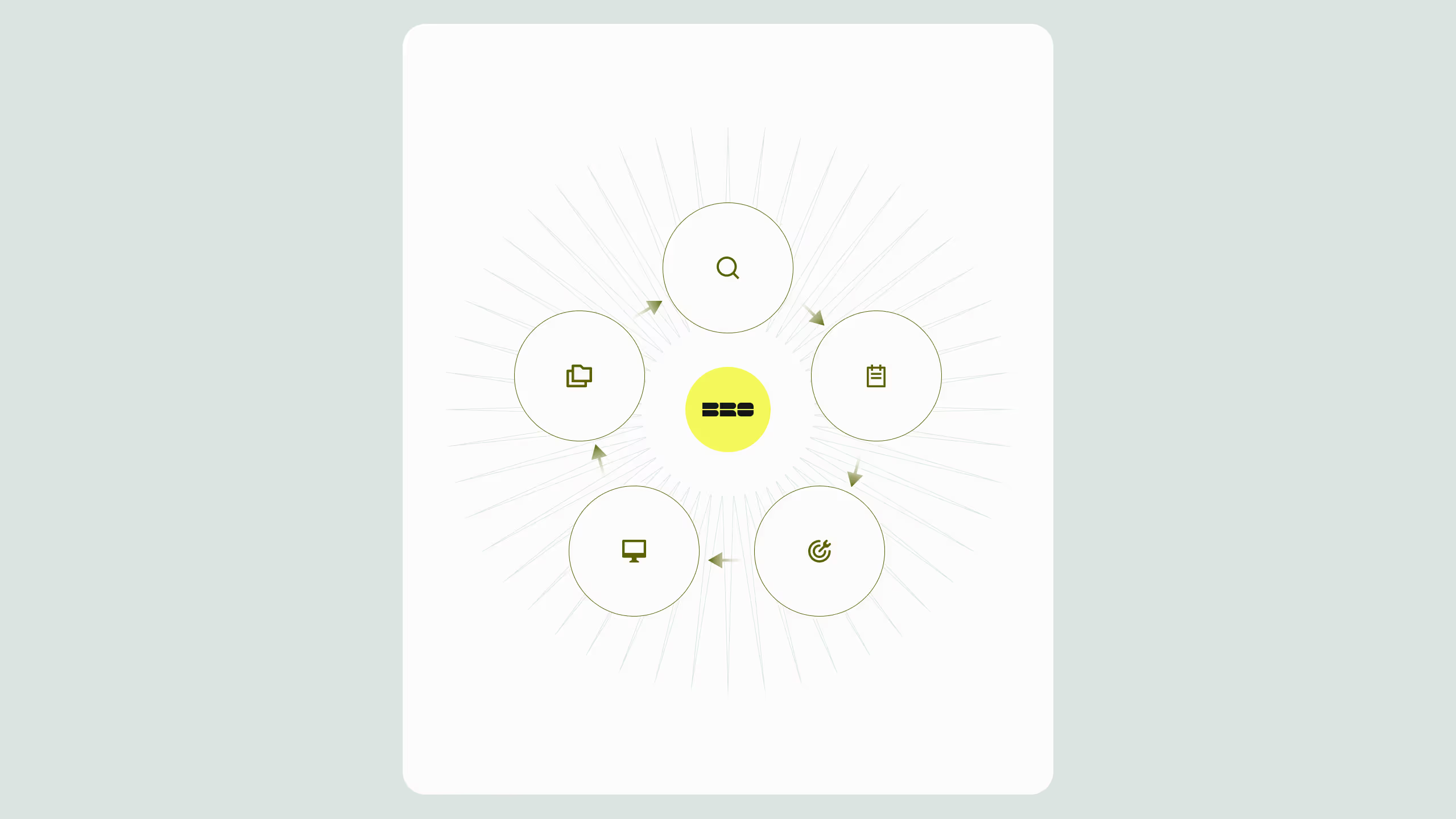
After you contact a Webflow agency, expect a structured 6-8 week process from discovery to launch. Broworks begins with a discovery call and technical audit within the first week, followed by transparent proposal presentation with fixed pricing ($10K-$20K+ based on scope). Strategic onboarding takes 1-2 weeks and includes ICP creation, competitive analysis, user journey mapping, and wireframing. Art direction and visual design require another 1-2 weeks to establish brand expression and create comprehensive design systems. Development with integrated SEO and AEO optimization spans 3-4 weeks, followed by systematic QA, team training, and launch coordination. This accelerated timeline is possible through structured process and clear communication. Post-launch, growth-focused agencies offer monthly optimization subscriptions starting at $3,900 to ensure continuous improvement rather than treating launch as a transactional endpoint.
Contact Webflow Agency: What Happens Next
When you contact a Webflow agency for the first time, you're making a decisive move toward transforming your website infrastructure. But what actually happens next? For marketing directors and CMOs evaluating Webflow partners, the post-inquiry phase often feels opaque, full of uncertainty about timelines, deliverables, and resource commitments.
This vendor guide provides a transparent breakdown of what unfolds after your initial inquiry when working with a strategic Webflow partner. From discovery calls and technical audits to proposal alignment, strategic onboarding, and final handover, understanding this workflow helps you set realistic expectations, allocate internal resources appropriately, and evaluate whether a prospective agency operates with the business clarity your team requires.
Most Webflow projects at Broworks complete in 6-8 weeks total, far faster than the industry standard 3-4 month timeline. Whether you're planning a WordPress to Webflow migration, building a new SaaS website, or seeking performance optimization, knowing what comes after you contact a Webflow agency eliminates guesswork and positions you for a successful partnership.
The Initial Response and Qualification (Days 1-3)
After you submit an inquiry form or send an initial email, established Webflow agencies respond within 24-48 hours. This first touchpoint is not just administrative, it's a mutual qualification checkpoint where both parties determine fit before investing deeper time.
What happens during initial qualification:
The agency will ask clarifying questions about your current platform, team size, migration urgency, and key pain points. They're assessing whether your needs align with their capabilities and whether your timeline, budget expectations, and organizational maturity match their ideal client profile. Simultaneously, you're evaluating their responsiveness, communication style, and initial understanding of your business context.
At Broworks, this stage involves a brief intake conversation, often async via email or a 15-minute exploratory call, to confirm basic fit before scheduling a formal discovery session. Agencies that skip this step often waste both parties' time by proceeding to proposals that miss the mark strategically or financially.
According to a 2024 survey by Clutch, 68% of B2B buyers cite slow agency response times as a primary frustration during vendor selection. Agencies that respond quickly and ask intelligent qualifying questions demonstrate the proactive partnership mindset that matters post-contract.
Discovery Call and Strategic Audit (Week 1)
Once mutual fit is established when you contact a Webflow agency, the discovery phase begins. This is where transparency and depth separate strategic agencies from order-takers.
Discovery Call Structure
A thorough discovery call lasts 45-90 minutes and covers five critical areas:
- Current state analysis - What platform you're on, why it's not working, and what you've already tried
- Business objectives - Revenue goals, lead generation targets, or brand positioning shifts driving the website project
- Technical constraints - Existing integrations such as HubSpot, Salesforce, or analytics tools, plus team technical literacy and hosting preferences
- Content and SEO considerations - Organic traffic volume, keyword portfolios, international markets, and existing content performance
- Stakeholder alignment - Who owns final approval, who manages content post-launch, and what internal dependencies exist
This conversation reveals whether the agency understands growth systems, not just visual design. If they don't ask about conversion funnels, organic acquisition channels, or post-launch ownership, they're treating your website as a deliverable rather than a growth asset.
Technical Audit Process
Following the discovery call, strategic agencies conduct a technical audit of your current site. This includes performance benchmarking using Core Web Vitals, page speed scores, and mobile responsiveness metrics. The audit also examines SEO health through crawl error analysis, redirect chains, schema implementation, and meta coverage. A content inventory catalogs total page count, dynamic versus static pages, and CMS structure complexity. Integration mapping identifies third-party tools, form handlers, tracking scripts, and API dependencies.
Broworks typically completes this audit within 3-5 business days and shares findings in a structured document that doubles as a risk mitigation roadmap for the migration itself.
Proposal Presentation and Alignment (Week 1)
After completing the technical audit, agencies present a detailed proposal that translates discovery insights into actionable scope. At Broworks, this happens within the same week as the discovery call, ensuring momentum doesn't stall.
What a comprehensive proposal includes:
The proposal defines project scope with specific page counts, CMS collection structures, and integration requirements. It outlines clear deliverables including the Webflow site, CMS setup, redirect mapping, analytics configuration, and training documentation. Timeline mapping shows phase durations with realistic expectations, most Broworks projects complete in 6-8 weeks compared to industry averages of 12-16 weeks. The pricing structure provides transparent fixed fees tied to defined scope, eliminating surprise costs mid-project.
Broworks Pricing Structure
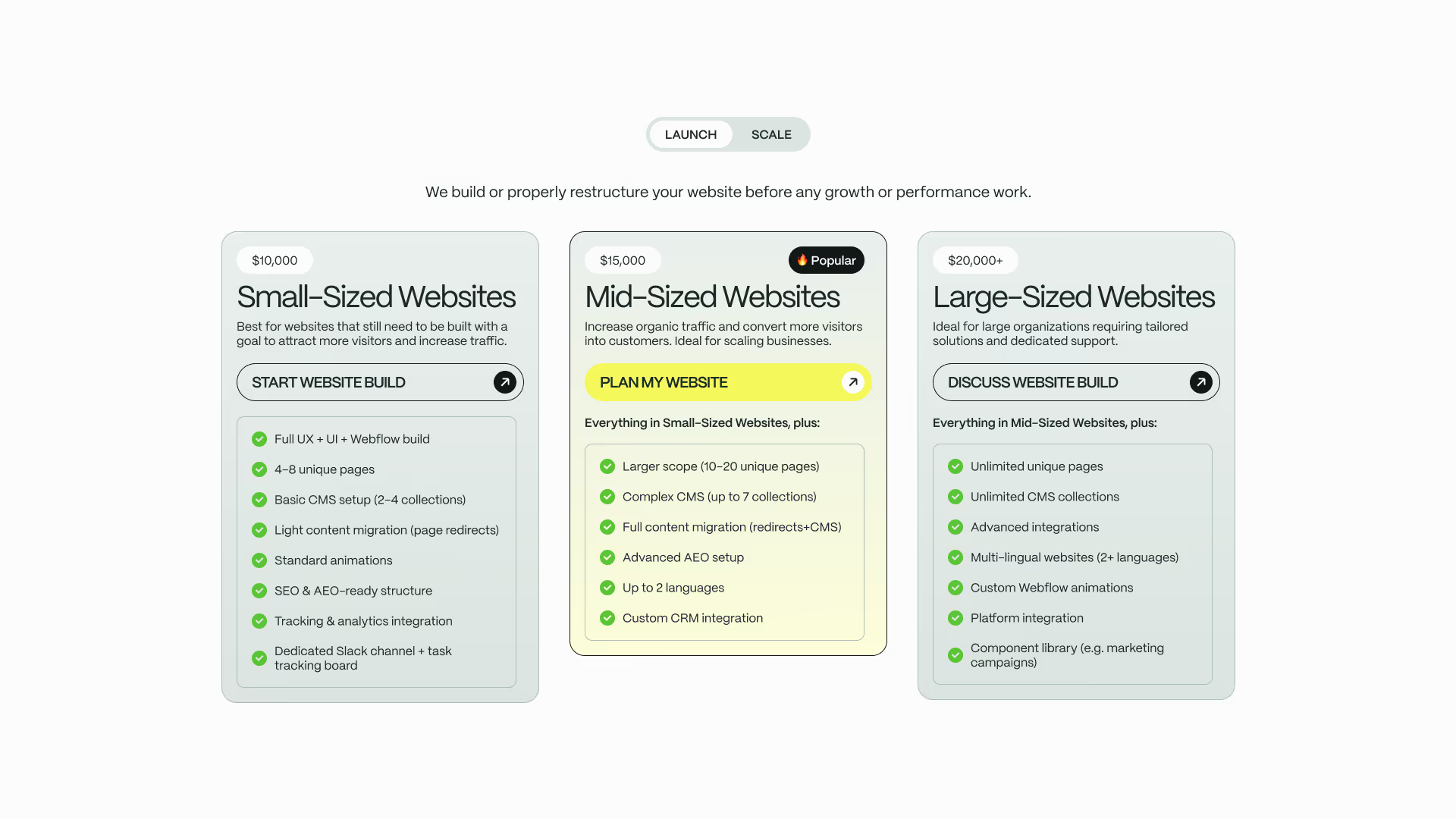
Unlike agencies that provide vague estimates, Broworks offers transparent, tier-based pricing on our pricing page:
Small-Sized Websites: $10,000
- 4-8 unique pages with basic CMS setup (2-4 collections)
- Full UX, UI, and Webflow build
- Light content migration with page redirects
- SEO and AEO-ready structure
- Tracking and analytics integration
- Dedicated Slack channel with task tracking
Mid-Sized Websites: $15,000 (Most Popular)
- 10-20 unique pages with complex CMS (up to 7 collections)
- Full content migration including redirects and CMS data
- Advanced AEO setup for AI search visibility
- Up to 2 languages supported
- Custom CRM integration
Large-Sized Websites: $20,000+
- Unlimited pages and CMS collections
- Advanced integrations and multi-lingual support (2+ languages)
- Custom Webflow animations
- Platform integration and component library for marketing campaigns
Research from the Project Management Institute shows that 39% of project failures stem from poor scope definition. When you contact a Webflow agency, the quality and transparency of their proposal is one of the most reliable predictors of project success.
Pricing Transparency Matters
Agencies that provide pricing ranges upfront, tied to specific scope boundaries, demonstrate confidence and respect for your budgeting process. Vague responses signal either inexperience or a lack of process maturity. Broworks' fixed-price model eliminates scope creep anxiety and allows you to budget accurately from day one.
Kickoff and Strategic Onboarding (Weeks 2-3)
Once the proposal is signed, the strategic onboarding phase begins. At Broworks, this takes 1-2 weeks maximum and focuses on building the strategic foundation that will drive all design and development decisions.
Kickoff Meeting Agenda
A structured kickoff typically includes team introductions to designers, developers, project managers, and specialists in CRO, SEO, or integrations. Communication protocols establish Slack channels, project management tools like Asana or Notion, and meeting frequency. Access provisioning grants Webflow workspace invites, current site admin credentials, analytics access, and CMS logins.
Strategic Foundation Work:
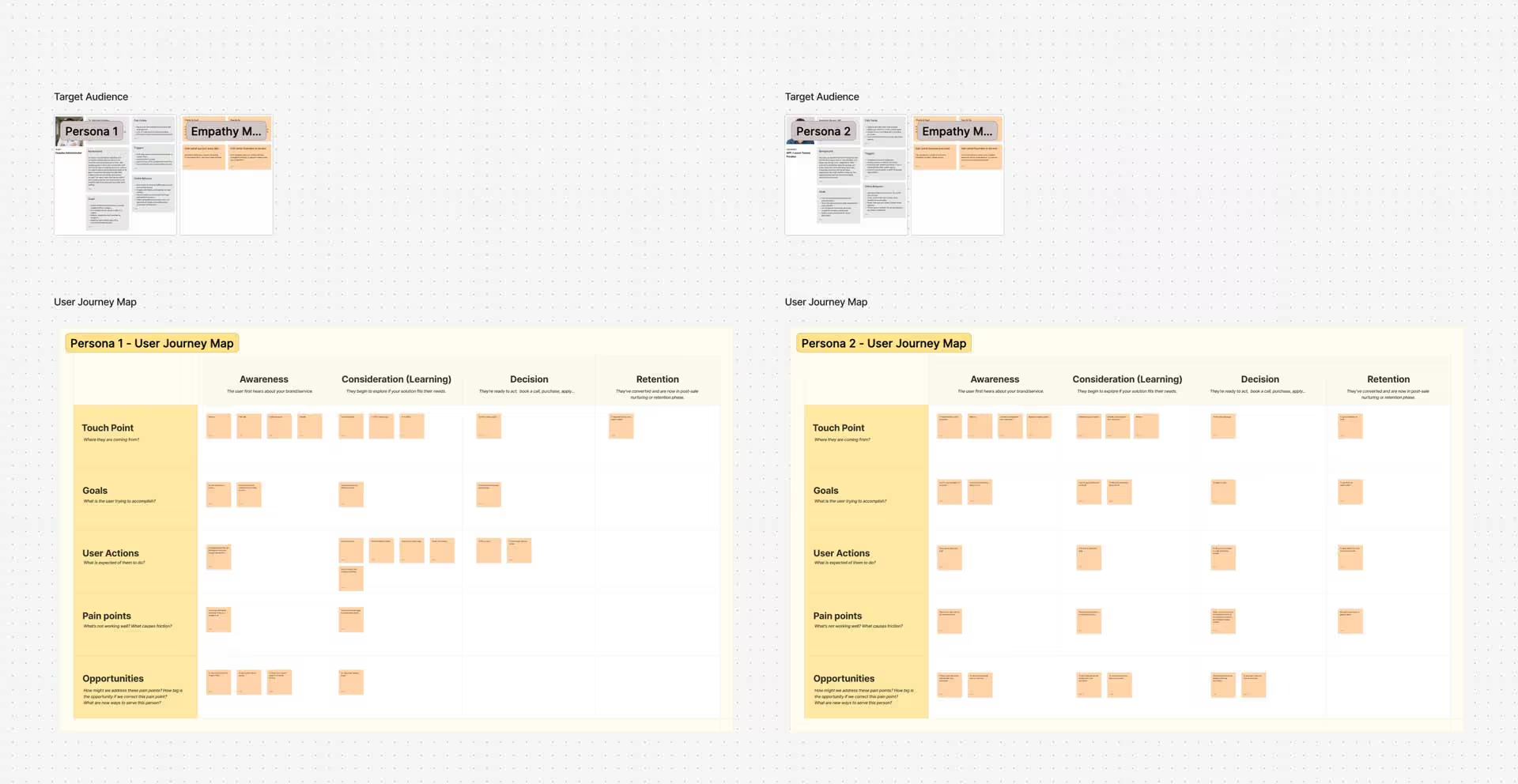
This phase goes far beyond administrative setup. The Broworks team conducts business goals and strategy sessions to understand what success looks like beyond just launching a website. Competitive analysis identifies how your site needs to differentiate from direct competitors and market leaders. ICP creation and empathy mapping ensures every design decision reflects your target audience's needs and pain points. User journey mapping visualizes how prospects move from awareness to conversion across your site.
Keyword research establishes the SEO foundation, identifying primary keywords, long-tail opportunities, and content gaps. Sitemap development organizes site architecture for optimal user experience and SEO performance. Wireframing translates strategy into low-fidelity layouts that validate information hierarchy before visual design begins.
Content and Asset Dependencies
One of the most common bottlenecks in Webflow projects is content readiness. Agencies will request final copy for all pages or at least structural outlines, high-resolution images and videos, brand assets including logos in vector formats with color codes and typography guidelines, and access to third-party platforms for integration testing.
If you're migrating from WordPress, Broworks exports your existing content programmatically and cleans it for Webflow's CMS structure. This reduces manual data entry but requires careful mapping to preserve SEO metadata and internal linking.
Art Direction and Visual Design (Weeks 3-4)
After strategic onboarding establishes the foundation, the design phase brings your brand to life in Webflow. This phase typically takes 1-2 weeks at Broworks and follows a proven methodology that reduces revision cycles.
Art Direction Exploration
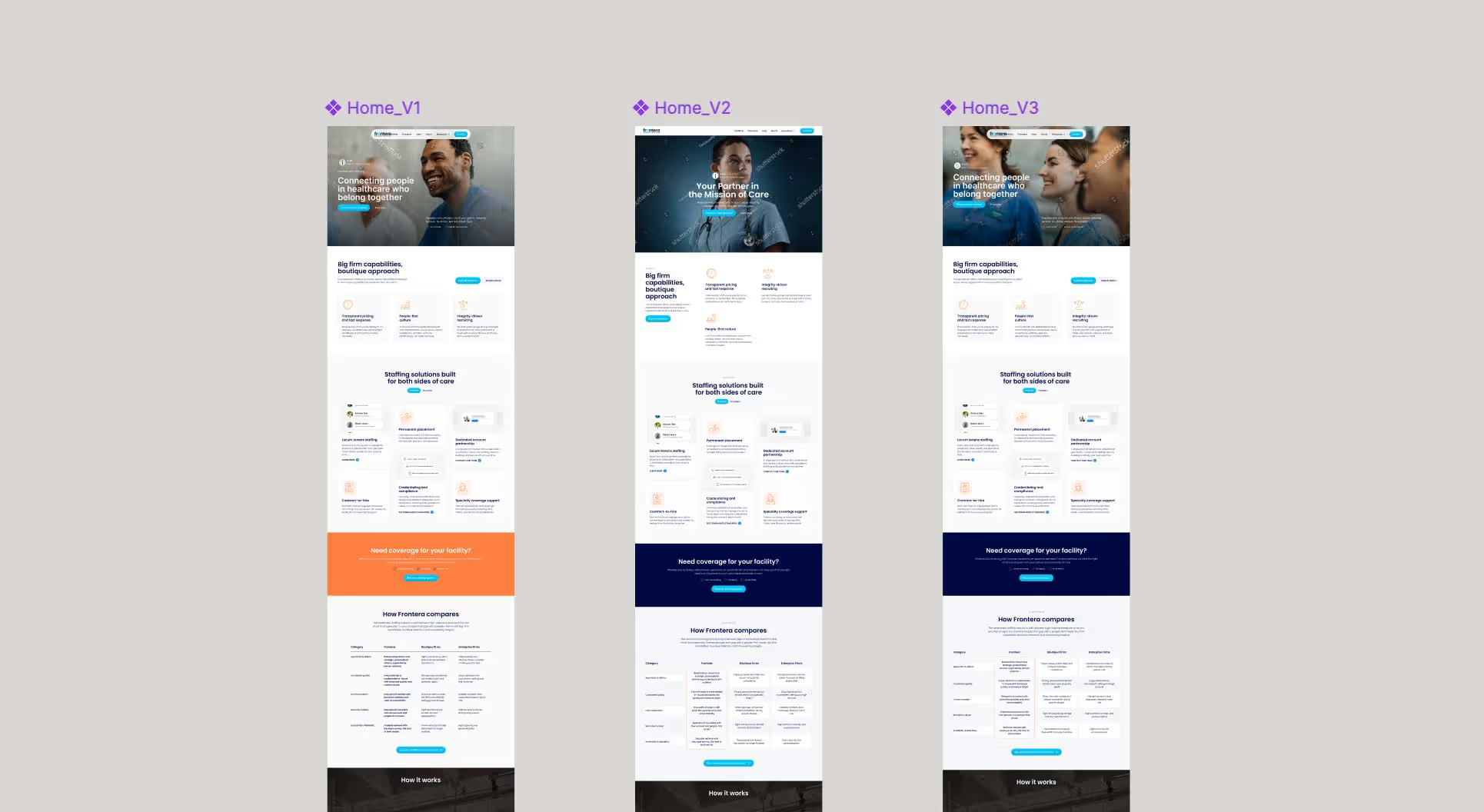
Before designing every page, Broworks explores art direction options, usually on the homepage only. This approach allows stakeholders to evaluate different visual styles, interaction patterns, and brand expressions without the time investment of full-site mockups.
The art direction exploration includes: Three distinct visual directions showing different approaches to typography, color usage, imagery style, and layout structure. Each direction demonstrates how your brand could come to life while maintaining conversion-focused UX principles. Stakeholders provide feedback on which direction best represents their brand maturity, target audience expectations, and differentiation goals.
Once a direction is selected, the team proceeds with confidence, knowing all subsequent pages will follow the approved aesthetic framework.
Visual Design in Figma
With art direction locked, designers create high-fidelity mockups in Figma for all page templates. These designs incorporate brand alignment through refined color palettes, typography hierarchies, and imagery styles. Accessibility considerations ensure proper contrast ratios and touch target sizes. Interaction states define hover effects, button animations, and loading patterns.
Design system development: Rather than creating one-off page designs, Broworks builds a comprehensive design system that includes reusable components, style guide documentation, and responsive behavior patterns. This system ensures design consistency across the site and makes future updates efficient.
Broworks provides 1-2 rounds of revisions within the initial scope. Additional rounds often incur extra fees, so consolidating feedback internally before submitting is critical. Designs are shared through Figma for real-time collaboration, allowing stakeholders to leave contextual comments directly on design elements.
According to Nielsen Norman Group research, organizations with documented design systems reduce design and development time by 47% compared to those building custom components for each project.
Webflow Development, SEO, and AEO Optimization (Weeks 5-7)
This is where Webflow's power becomes tangible when you contact a Webflow agency for enterprise development. The development phase at Broworks takes 3-4 weeks depending on project size and runs parallel with comprehensive SEO and AEO setup.
CMS Structure and Scalability
Webflow's CMS allows non-technical teams to manage content post-launch, but the initial structure determines long-term maintainability. Developers configure collection templates for blog posts, case studies, team members, services, and resources. Multi-reference fields connect related content, such as tagging blog posts with service categories or linking case studies to industries. Conditional visibility shows or hides elements based on CMS field values, enabling dynamic content presentation without developer intervention.
A well-architected CMS eliminates the need for developer support when adding new blog posts, updating team bios, or launching product pages. Broworks structures CMS collections following Client-First methodology, ensuring clean, maintainable code that your team can edit confidently.
Integration Implementation
For SaaS and enterprise clients, integrations are non-negotiable. Common integrations Broworks implements include:
- HubSpot: Form submissions syncing to CRM with lead scoring triggers and automated workflows
- Google Analytics 4 and Google Tag Manager: Event tracking, conversion funnels, custom dimensions, and enhanced e-commerce tracking
- Zapier or Make.com: Automating workflows between Webflow and Slack, Airtable, or other business tools
- Memberstack or Webflow Memberships: Gated content, user authentication, and personalized experiences
Each integration requires API configuration, thorough testing, and documentation so your team can troubleshoot post-launch issues independently.
On-Page and Technical SEO Setup
Unlike agencies that treat SEO as an afterthought, Broworks builds SEO foundations during development. This includes meta tag optimization for every page with unique titles and descriptions targeting specific keywords. Schema markup implementation provides structured data for rich snippets in search results. XML sitemap generation and submission ensures search engines can crawl your site efficiently. Canonical URL configuration prevents duplicate content issues. Image optimization compresses files without quality loss while adding descriptive alt text for accessibility and SEO.
According to Google's research, 53% of mobile users abandon sites that take longer than 3 seconds to load. Performance is not optional, it's foundational to conversion and SEO success.
Answer Engine Optimization (AEO)
Beyond traditional SEO, Broworks implements Answer Engine Optimization to ensure your content surfaces in AI search tools like ChatGPT, Perplexity, and Claude. This includes structured content blocks formatted for AI extraction, entity-focused writing that clearly defines key concepts, FAQ sections with standalone answers suitable for voice search, and comprehensive topic coverage that establishes topical authority.
As AI-powered search grows, AEO becomes critical for maintaining visibility. Broworks was an early adopter of AEO strategies, and our AEO services help brands rank in both traditional search engines and AI assistants.
Quality Assurance, Training, and Launch (Weeks 7-8)
Before launching, Broworks conducts systematic QA across devices, browsers, and user scenarios. This final phase takes approximately 1 week and includes both technical validation and team training.
QA testing checklist includes:
- Cross-browser testing in Chrome, Safari, Firefox, and Edge
- Device testing on iPhone, Android, iPad, and desktop resolutions ranging from 320px to 1920px width
- Form validation ensuring all submissions route correctly with proper error states and success messages
- Link integrity confirming no 404s, all internal links resolve correctly, and external links open in new tabs when appropriate
- SEO validation of meta tags, alt text, canonical URLs, and schema markup across all pages
- Accessibility audit covering keyboard navigation, screen reader compatibility, and WCAG 2.2 color contrast standards
Broworks uses tools like BrowserStack for device testing and Lighthouse for performance and accessibility scoring, ensuring your site meets enterprise-grade quality standards.
Client Review and Feedback
You'll receive staging links to review the site before it goes live. This is your opportunity to test all content edits, verify integrations behave as expected, confirm design fidelity to approved mockups, and identify any last-minute copy changes.
Consolidate feedback into a single document or Loom video rather than scattering revisions across email threads and Slack messages. This accelerates turnaround and prevents duplicate work.
Team Training
A website is only as valuable as your team's ability to maintain it. Broworks provides 2-3 hours of comprehensive training covering:
- CMS basics: Creating, editing, and publishing collection items without breaking layouts
- Page editing: Updating static content, swapping images, and adjusting CTAs
- Design system usage: Applying pre-built components and maintaining visual consistency
- SEO best practices: Writing meta descriptions, adding alt text, and managing redirects
Training sessions are recorded and provided as a custom Loom library so your team can reference them indefinitely. Written documentation includes screenshots, step-by-step workflows, CMS field glossaries, and troubleshooting guides for common issues.
Launch Execution
Launch day involves technical precision and risk mitigation. The process typically takes 2-4 hours and includes:
- Pre-launch backup: Exporting current WordPress site and documenting existing redirects
- 301 redirect mapping: Ensuring every old URL redirects to its new Webflow equivalent to preserve SEO equity
- DNS configuration: Updating nameservers or CNAME records to point to Webflow hosting
- SSL certificate activation: Webflow auto-generates SSL certificates, but custom domains require verification
- Smoke testing: Running through critical user flows on the live site to confirm everything functions correctly
Most Broworks launches happen during off-peak hours, late evening or weekend, to minimize disruption for businesses with high traffic during standard hours.
Post-Launch Monitoring
For the first 72 hours post-launch, the team monitors traffic patterns comparing pre- and post-migration analytics, error logs identifying any broken redirects or integration failures, Core Web Vitals ensuring performance metrics meet expectations, and form submissions confirming lead capture flows work end-to-end.
Post-Launch Support and Optimization Options
The relationship doesn't end at launch. Broworks offers ongoing support options including monthly subscriptions for continuous optimization, on-demand support for ad-hoc updates and troubleshooting, performance monitoring with quarterly analytics reviews and CRO recommendations, and content strategy guidance for maintaining SEO momentum.
Growth and Performance Plans
After completing your initial build, many clients transition to Broworks' subscription-based growth plans:
Growth Plan: $3,900/month
- ICP-focused organic traffic growth
- On-page and technical SEO optimization
- AEO content optimization
- Keyword research and content strategy
- Monthly website content calendar
- Weekly progress calls and reports
- Dedicated Growth Marketer and Slack channel
Performance Plan: $6,500/month (Most Popular)
- Everything in Growth Plan, plus:
- Conversion rate optimization (CRO)
- Funnel and user journey analysis
- A/B testing and experimentation
- Conversion tracking and insights
- Dedicated CRO specialist
The most successful WordPress to Webflow migrations include a 90-day optimization period where the team monitors performance, implements data-driven improvements, and trains teams on advanced features as they become comfortable with basics.
When you contact a Webflow agency, ask about their post-launch support philosophy. Agencies that view launch as the beginning of a partnership, not the end of a transaction, deliver compounding value over time.
.svg)
.svg)