
AEO vs Traditional SEO: What Still Matters and What Doesn’t in 2026

TL;DR
Search in 2026 is increasingly shaped by AI-driven answer engines, shifting focus from traditional ranking signals to content clarity, context, and interpretability. While technical SEO, structured URLs, and authoritative content remain important, tactics like keyword stuffing or backlink volume alone have diminished impact. AI systems now evaluate semantic relationships, entity definitions, and content comprehensiveness to determine relevance. Integrating both traditional SEO and AEO practices ensures content remains discoverable, credible, and adaptable to evolving search behaviors. Organizations that prioritize structured, intent-focused content alongside foundational SEO principles are better positioned to maintain visibility and influence in an AI-first search landscape.
Search engine optimization has evolved dramatically with the rise of AI-driven search and answer engines. Understanding AEO vs SEO is critical for organizations aiming to maintain visibility, relevance, and influence. Traditional SEO focused on ranking pages for specific keywords, backlinks, and technical signals. Today, AI-mediated search increasingly prioritizes answer quality, content context, and structural clarity over conventional ranking signals.
From a Webflow perspective, building sites that are both technically sound and semantically clear ensures content remains interpretable for AI and search engines alike. Integrating AEO principles alongside traditional SEO practices protects long-term visibility while adapting to new consumption patterns.
How AEO differs from traditional SEO
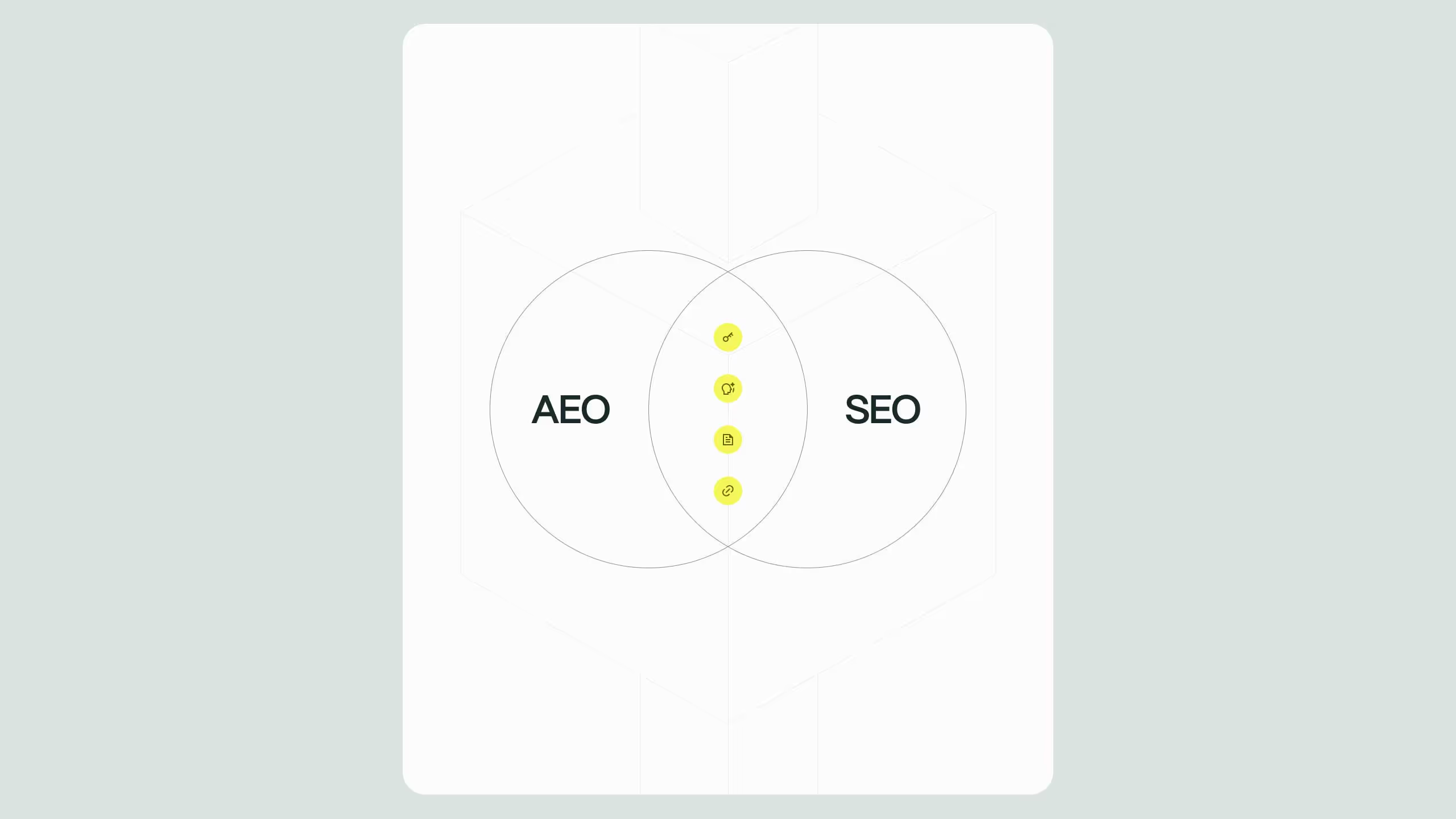
AEO, or answer engine optimization, emphasizes how content is extracted, interpreted, and summarized by AI systems. Traditional SEO relied on on-page optimization, keyword targeting, and link-building to drive traffic. Key differences include:
- Content comprehension: AI evaluates content meaning, not just keyword density
- Entity recognition: Clear definitions of people, products, and concepts improve citations
- Structured data and context: Schema, headings, and semantic hierarchy matter more than sheer content volume
Why some traditional SEO tactics still matter
Despite the rise of AEO, certain traditional SEO practices remain relevant:
- Technical SEO: Crawlability, site speed, mobile responsiveness
- URL structure: Predictable and consistent URLs still help AI and search indexing
- Internal linking: Guides both users and algorithms through contextual relationships
- Content authority: High-quality, well-researched content remains critical
However, many old tactics like over-optimized keyword stuffing or purely backlink-focused strategies have diminished returns, especially in AI-driven search environments.
What has changed in ranking factors
AI-powered engines assess content differently. Unlike traditional SEO, which rewarded volume and repetition, AEO emphasizes:
- Concise answers: AI prioritizes clarity and completeness
- Semantic relevance: Content must address intent holistically
- Trust signals: Updated references, clear authorship, and consistent messaging
- Integration with other systems: Structured data from CRMs or analytics reinforces authority
Organizations using Webflow SEO services can align both traditional and AI-focused signals for maximum visibility.
Content strategy in an AEO-first world
Shifting from keyword-centric to intent-centric content is essential. Best practices include:
- Consolidating overlapping pages into authoritative hubs
- Structuring content for easy extraction by AI engines
- Using consistent terminology and entity references across pages
- Leveraging internal linking to reinforce topic relationships
Our approach ensures Webflow CMS architecture supports this shift, providing a foundation for scalable AEO and traditional SEO success.
Measuring success differently
Traditional SEO often focused on rankings and clicks. With AEO, measurement expands to include:
- Visibility in AI-generated summaries and citations
- Engagement signals post-AI exposure
- Assisted conversions and downstream influence
- Crawlability and structured data validation
By tracking these metrics, teams can assess the impact of both traditional and AI-mediated search efforts.
Technical considerations for AEO and SEO
Webflow’s platform offers tools to implement both traditional and AI-focused optimization:
- Clean, semantic HTML and CSS for interpretability
- Schema markup for products, services, and articles
- Dynamic CMS content aligned with semantic hierarchies
- Performance optimization to maintain crawl efficiency
Combine technical audits, CMS structuring, and ongoing monitoring to bridge the gap between SEO and AEO priorities.
Integration with marketing and business systems
Modern search engines often pull data from multiple sources. Integrating analytics, CRMs, and product feeds enhances trust signals. Broworks ensures that Webflow CMS structures content to align with these systems, maintaining consistency, accuracy, and interpretability for AI and search engines alike.
Common pitfalls and how to avoid them
Organizations often struggle with:
- Duplicate content across multiple pages or CMS collections
- Ignoring structured data or schema implementation
- Treating AI and traditional SEO in isolation
- Neglecting ongoing maintenance and updates
By taking a holistic approach that addresses both AEO vs SEO priorities, teams can preserve visibility while preparing for evolving search algorithms.
Preparing for the future of search
Search in 2026 rewards clarity, context, and authority. Combining traditional SEO fundamentals with AEO principles ensures content is both discoverable and interpretable. Webflow sites designed with structured CMS content, semantic linking, and clear entity definition provide a sustainable advantage. Organizations that align technical, content, and semantic strategies are positioned to thrive in an AI-first search environment.
Conclusion
Understanding AEO vs SEO highlights a shift in search strategy from keywords and backlinks to context, clarity, and AI interpretability. Traditional SEO still matters for technical foundations and content authority, but AI-mediated discovery increasingly prioritizes structured, semantically-rich content. A strategic approach that integrates both ensures websites maintain visibility, authority, and performance while adapting to evolving user behavior. Partnering with a specialized Webflow SEO partner like Broworks provides the technical and strategic expertise needed to navigate this new landscape.
.svg)
.svg)


