
WordPress to Webflow migration services for SaaS and enterprise websites without losing SEO
WordPress to Webflow migration services for SaaS and enterprise websites help companies move away from performance issues, plugin dependency, and limited scalability. We migrate your website to Webflow while preserving SEO, improving performance, and restructuring your site for growth.
This page is for:

SaaS companies migrating from WordPress
Marketing teams need faster updates, scalable CMS, and better performance. WordPress slows down experimentation and growth.

Enterprise teams migrating from WordPress
Large websites become difficult to maintain. Plugin dependency, performance issues, and complex CMS structures create operational risk.
Why SaaS and enterprise WordPress websites struggle
Plugin dependency creates performance issues
CMS becomes difficult to scale
Design flexibility limited by themes
Updates require developer resources
What delivers the fastest results after migrating
Highest impact improvements:
Which approaches deliver the fastest results
How we structure WordPress to Webflow migrations for better AI visibility
Migrating from WordPress to Webflow is more than rebuilding pages. We restructure your website so search engines and AI systems can better understand your content, relationships, and intent.
Clarify page intent
We analyze each page and define its primary purpose, ensuring it targets a specific topic or decision stage without overlapping other pages.
Consolidate competing content
We identify overlapping pages, merge duplicate content, and strengthen authority around core topics during the migration.
Connect related content
We restructure internal linking between product, solution, and resource pages to improve context and discoverability.
Format content for extraction
We restructure pages using structured sections, FAQs, and decision-focused content that AI systems can easily extract.
Align content with decision intent
We optimize key pages for conversions by aligning them with buyer intent, not just informational search.
Where WordPress to Webflow migration makes the biggest difference
If your WordPress site is hard to scale
Migrating to Webflow helps create a structured CMS and scalable content architecture.
If performance and SEO are inconsistent
Migration improves technical performance and content structure.
If you're redesigning or scaling your SaaS website
Migration is the best time to restructure content and improve conversion paths.
If your website doesn't convert
Migration allows restructuring of key pages to better support decision-making.
OUR PROCESS
Deliverables

Deliverables

Deliverables

Deliverables

Deliverables

Case studies

Frontera
Webflow-Migration for the recruitment in health system, wodurch die WordPress-Website von Frontera in eine Inbound-Conversion-Plattform umgewandelt wird.
.svg)
.svg)

Visa-Franchise
Neugestaltung der B2B-Unternehmenswebsite für Visa Franchise mit Schwerpunkt auf Vertrauen, Bildung und Generierung eingehender Nachfrage.
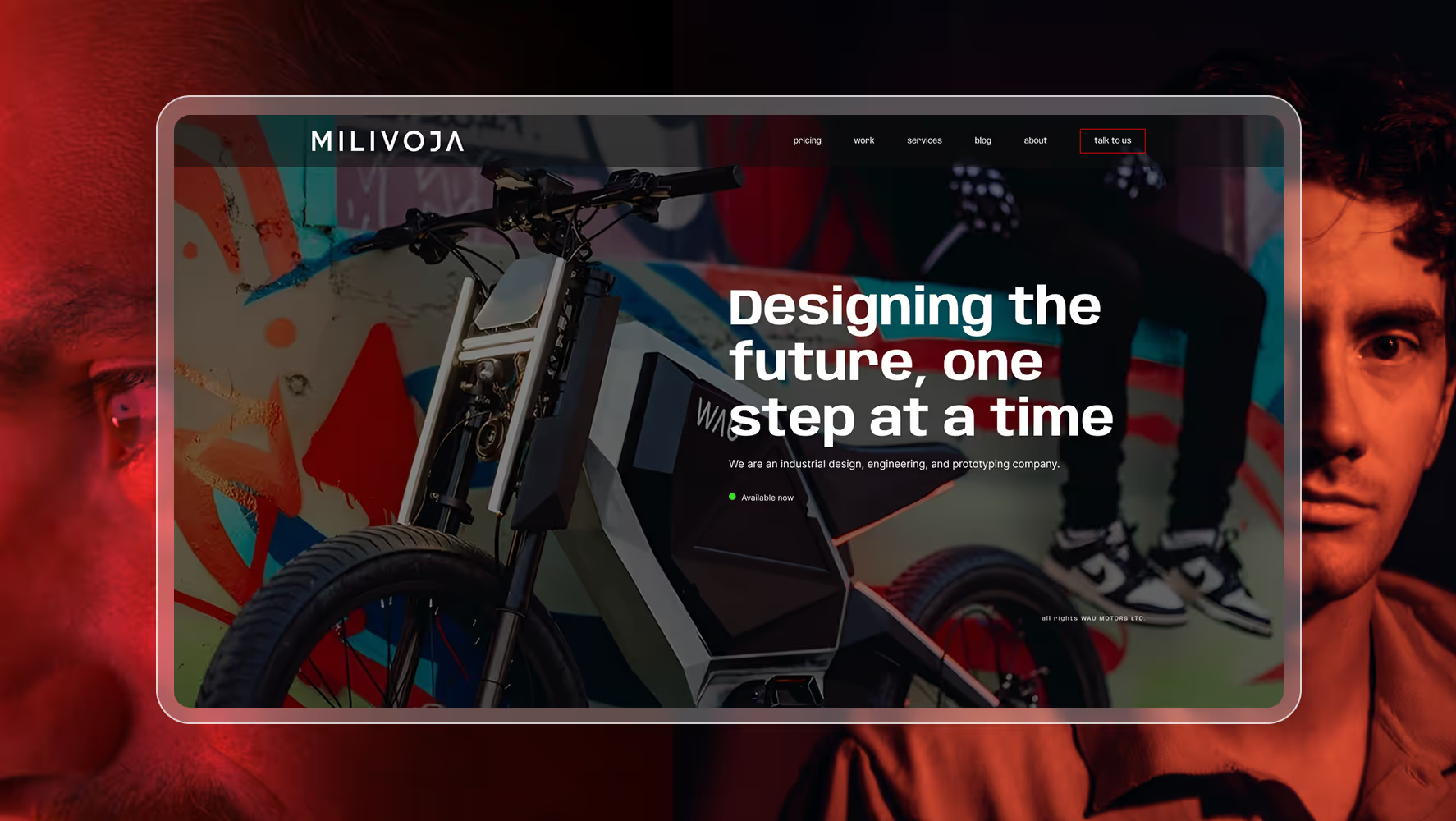
Milivoja
Die Migration von Milivoja WordPress zu Webflow konzentrierte sich auf Leistung, Stabilität und langfristige Wartbarkeit ohne visuelle Änderungen.

Minze
Das Redesign der MINT-Fintech-Webflow-Website konzentrierte sich auf Vertrauen, Konvertierung, Leistung und skalierbare Wachstumsworkflows.
.svg)