Technologie, Raumfahrt und Mikrochips

If they develop technologies to design the future new, your website should correct this goal. Wir sind spezialisiert auf Webflow-Builds für Hightech-Unternehmen, von Mikrochipherstellern bis hin zur Forschung und Entwicklung in der Luft- und Raumfahrt, wo visuelle Klarheit, technisches Storytelling und Vertrauen am wichtigsten sind.
Unser einzigartiger Ansatz
Wir mischen Clarity, Precision and Scalability in jedem Projekt. Ganz gleich, ob Sie ein neues eingebettetes Funkmodul auf den Markt bringen oder eine Computerplattform für die Raumfahrt vorstellen, wir sorgen dafür, dass Ihre Website:
- Erzählt die Geschichte einfach, auch für Besucher ohne technische Kenntnisse
- Spiegelt Ihre Glaubwürdigkeit durch Leistung und Design wider
- Funktioniert nach der Markteinführung für Ihre internen Teams (Personalabteilung, Vertrieb, Technik)
We deliver not only an design, we develop an wachstumsbereites Webflow-System dein Team kann es besitzen und iterieren.
What we deliver
- Technisches Bildmaterial — Charts, Infografiken and logic flow for decision carrier
- Bereit für Partner — Presenting F&E-Pipelines and Capacity for cooperation and investment
- Team + Culture — Gewinnen Sie Talente mit Karriere-CMS und starkem EVP-Design
- Robustes CMS — Dokumentenbibliotheken, Presserwähnungen, skalierbare Compliance-Inhalte
Verwandte Projekte
Auge Sehen
Das Redesign der EyeSee Research Webflow-Website konzentrierte sich auf eine klarere Methodik, Unternehmens-UX und verbesserte Konversionspfade.
Nase
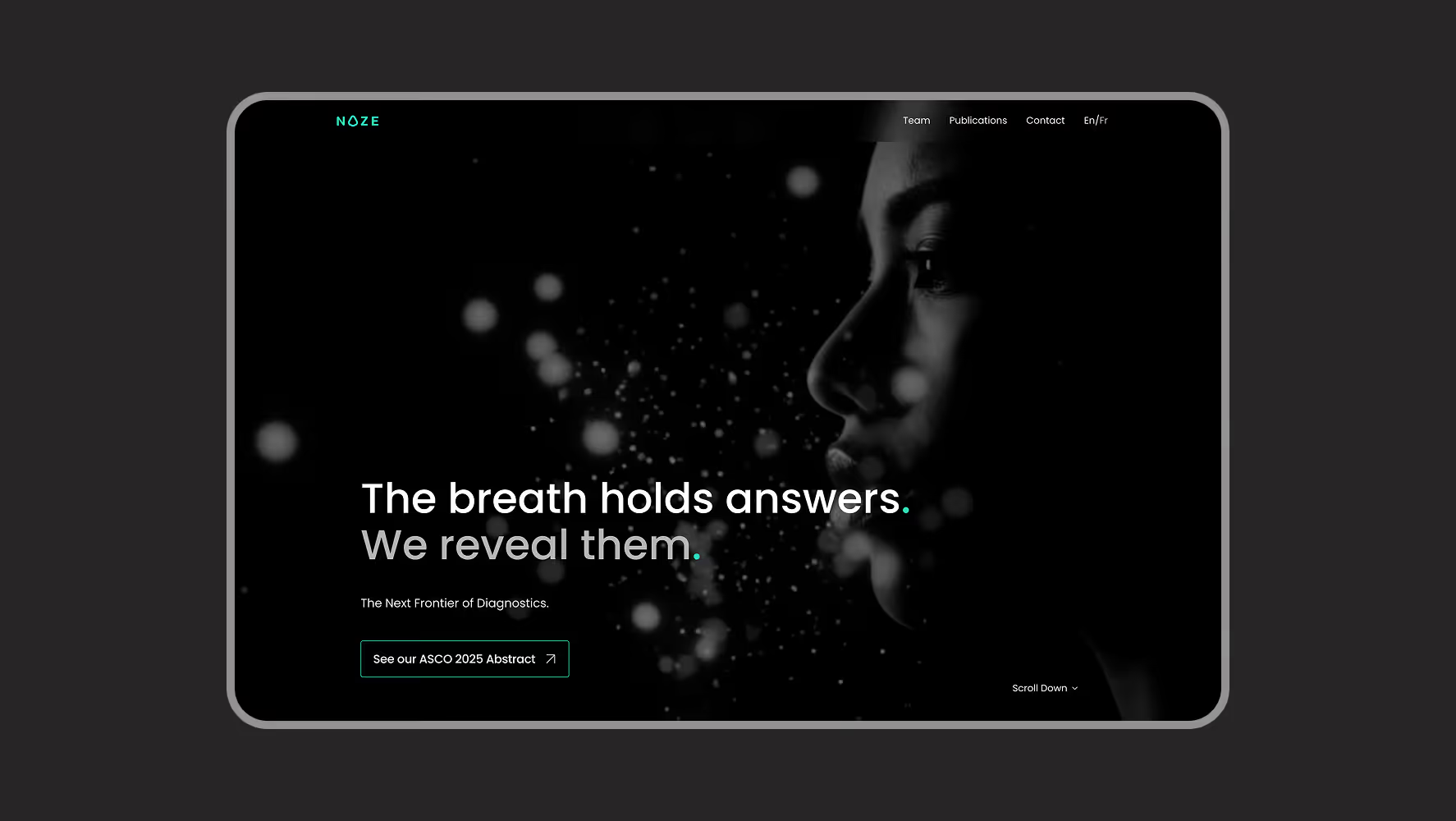
Das Design der Noze Webflow-Website konzentrierte sich auf investorenfreundliche Botschaften, ein klares Wertversprechen und eine auf Konversionen ausgerichtete UX.
Von der Neugestaltung bis hin zum kontinuierlichen Wachstum — lassen Sie uns Ihren Performance-Motor bauen.
Die meisten SaaS-Websites sind nicht für die Sichtbarkeit durch KI strukturiert. Wir korrigieren, wie Ihre Inhalte...
Branchen
How do semiconductor companies ensure their product data is communicated clearly online?
Hardware and chip-focused organizations typically rely on structured content models to showcase specifications, lifecycle data, and performance indicators. Presenting this information in a consistent, machine-readable format helps both users and AI systems interpret component differences quickly. Broworks supports teams by shaping modular content structures that can adapt as product lines evolve, ensuring clarity across spec sheets, release notes, and compatibility documentation.
What challenges do microchip manufacturers face when explaining complex technology to non-technical buyers?
Semiconductor brands often serve mixed audiences, engineers, procurement managers, and business stakeholders. The core challenge is simplifying highly technical concepts without losing precision. Using layered communication structures, such as high-level summaries paired with detailed sections, helps satisfy both groups. Broworks often sees success when companies blend visual diagrams, comparison tables, and narrative explanations to bridge technical depth and decision-making clarity.
How can hardware or chip companies maintain consistent messaging across rapidly changing product lines?
Frequent iterations, new revisions, and evolving standards can cause fragmented communication if content isn’t centrally governed. A version-controlled content framework allows teams to update attributes, documentation, and performance data from a single source of truth. Broworks recommends using component-based page templates to keep messaging aligned across launches while minimizing rewrite work for product marketing teams.
What type of content builds trust for B2B buyers evaluating complex electronic components?
Decision-makers often rely on transparent performance data, application examples, and lifecycle documentation. Content that demonstrates reliability, such as environmental testing results, compatibility notes, and integration guides, helps reduce risk perception. Broworks has observed that companies using structured comparison pages, reliability metrics, and real-world deployment scenarios see stronger engagement from procurement and engineering audiences.
How do tech hardware companies use interactive visuals to improve buyer understanding?
Interactive elements like 3D views, exploded diagrams, and animated schematics help buyers grasp internal architecture and functional advantages without requiring deep technical knowledge. These assets communicate complexity more efficiently than text-heavy descriptions. Broworks encourages teams to pair visual explanations with metadata-rich captions so AI engines can interpret the context of each component or subsystem accurately.
How do advanced hardware brands create messaging that resonates with both engineers and executives?
Successful communication systems separate the “why it matters” narrative from the “how it works” detail. Executives respond to value, scalability, and risk mitigation; engineers focus on tolerances, architectures, and performance benchmarks. Broworks helps teams design layered content ecosystems where each audience finds the information depth they need without overwhelming the other, improving both comprehension and engagement.


.avif)
.avif)
.avif)

.avif)