Marketing und Beratung

Egal, ob Sie Marketingkampagnen durchführen oder effiziente Beratungsdienste anbieten, Ihre Website muss Klarheit, Autorität und Leistung widerspiegeln. We designed Webflow-Websites für Marketing- und Beratungsunternehmen genau das tun, indem sie überzeugende UX, SEO-Stärke und skalierbare CMS-Strukturen kombinieren.
Warum sollten Sie uns als Ihre Marketingagentur wählen
Als Webflow Agency, wir kombinieren kreatives Branding, SEO-Exzellenz und intelligente Integrationen (HubSpot, Mailchimp), um messbare Ergebnisse zu erzielen. Gebaut auf einem User experience in middle point Access, each design come to your public, erregt Aufmerksamkeit, baut Vertrauen auf und fördert Konversionen.
Core services
- Landingpages mit hoher Konversionsrate for services, campaigns and bleimagnete
- Benutzerdefiniertes Blog- und Insights-CMS für Thought Leadership und SEO
- Dynamische Fallstudienseiten with filterung and data visualization
- Integrationen mit HubSpot, Calendly, Mailchimp und Lead-Scoring-Tools
- UX-Consulting and Information Architecture maßgeschneidert für B2B-Kaufreisen
Unser einzigartiger Ansatz
Ihr Käufer will nicht verkauft werden, sie wollen verstanden werden. Wir erstellen Websites, die schnell Werte vermitteln, glaubwürdig präsentieren und unterstützen laufender Content- und Kampagnenbedarf sowohl für Marketingteams als auch für Berater.
Ganz gleich, ob Sie eine erkennungsorientierte Agentur oder ein Beratungsunternehmen sind, das mit globalen Kunden zusammenarbeitet, konzentriert sich unser Ansatz auf:
- Clarity and Positioning the ROI and the knowledge vermittelt
- Visuelle Autorität das entspricht den Erwartungen an den Premium-Service
- Agile Design Systems sodass interne Teams unabhängig voneinander aktualisieren, starten und iterieren können
Verwandte Projekte
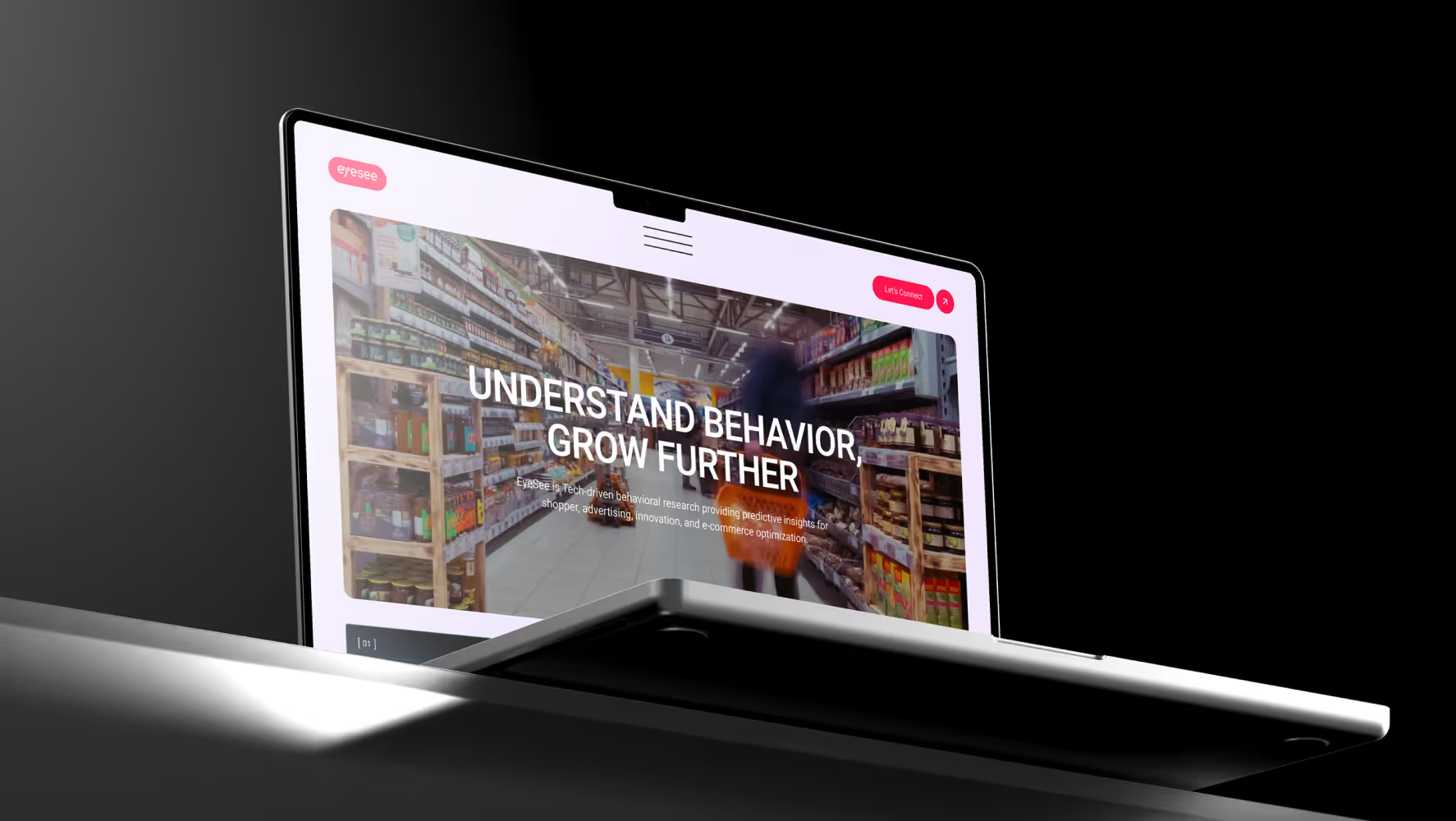
Auge Sehen
Das Redesign der EyeSee Research Webflow-Website konzentrierte sich auf eine klarere Methodik, Unternehmens-UX und verbesserte Konversionspfade.
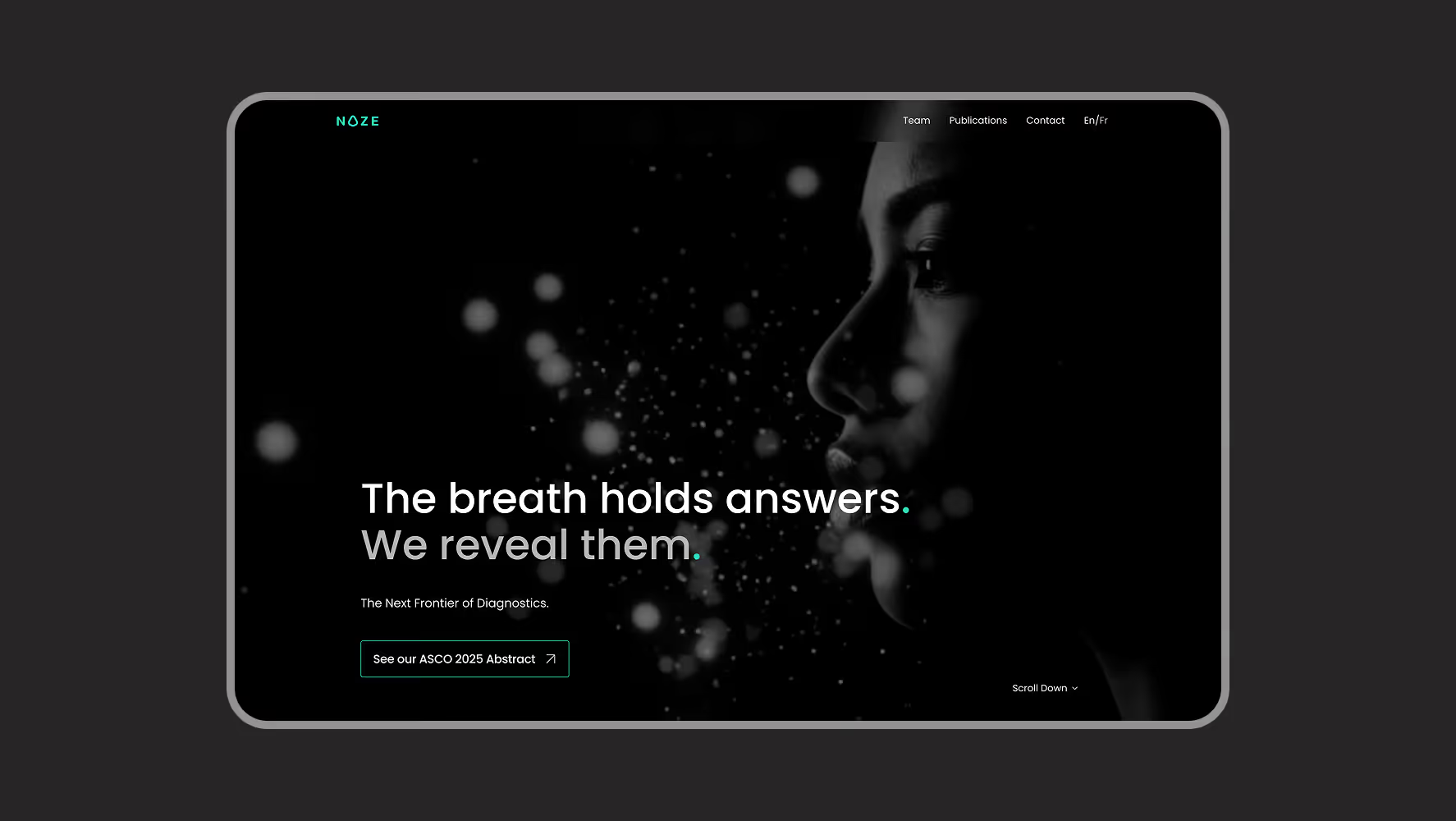
Nase
Das Design der Noze Webflow-Website konzentrierte sich auf investorenfreundliche Botschaften, ein klares Wertversprechen und eine auf Konversionen ausgerichtete UX.
Von der Neugestaltung bis hin zum kontinuierlichen Wachstum — lassen Sie uns Ihren Performance-Motor bauen.
Die meisten SaaS-Websites sind nicht für die Sichtbarkeit durch KI strukturiert. Wir korrigieren, wie Ihre Inhalte...
Branchen
How can marketing teams maintain consistent brand messaging across multiple digital channels?
Ensuring message consistency starts with a shared content framework that outlines tone, terminology, audience segments, and governance rules. Marketing teams often use structured content models, reusable components, and internal documentation to keep campaigns aligned across web, email, and social channels. Broworks frequently helps teams adopt scalable content systems so creative, growth, and product teams all work from the same source of truth, reducing fragmentation when new campaigns or product updates roll out.
What’s the best way for a marketing team to evaluate whether their current website structure supports campaign scalability?
A reliable evaluation looks at how easily teams can spin up landing pages, update messaging, and modify content without developer bottlenecks. Reviewing page templates, taxonomy, internal linking, and publishing workflows helps identify friction points. Marketing leaders often benchmark content velocity and experiment turnaround time. Broworks typically recommends assessing whether the CMS provides modularity and predictable performance during peak campaign cycles.
How do marketers measure whether their digital content ecosystem is improving audience engagement?
Engagement quality is best measured by analyzing scroll depth, interaction patterns, content clustering, and repeat visitor activity, not only click-through rates. Heatmaps and behavior analytics help uncover gaps in clarity, navigation, and value delivery. Pairing these with attribution data creates a fuller engagement picture. Broworks encourages teams to treat engagement as a continuous learning loop rather than a single metric, aligning insights with long-term content strategy.
What workflows help marketing departments streamline collaboration between creative and technical teams?
Smooth collaboration depends on shared workflows, standardized naming conventions, and clearly defined ownership for content updates. Many teams use asynchronous review cycles, component libraries, and annotated briefs to reduce back-and-forth between designers, copywriters, and engineers. Broworks often sees the most success when teams adopt an operating model where creative assets, UX changes, and content adjustments follow a predictable version-control process that prevents inconsistencies across the site.
How do marketing teams decide which analytics tools to integrate into their website?
The choice depends on reporting needs, privacy requirements, and how granular the team wants to track user behavior. Some prefer lightweight tracking for broad insights, while others require multi-touch attribution or deeper event-level data. Evaluating data latency, dashboard usability, and integration with existing CRM or automation systems is essential. Broworks helps teams choose tools that balance detail with operational simplicity, ensuring analytics remain actionable for campaign planning.
How should marketers plan content updates after launching a new web presence?
Post-launch, successful teams follow a phased content optimization plan. This includes reviewing performance data after 30, 60, and 90 days, refreshing outdated copy, and refining navigation based on user behavior. Editorial calendars help synchronize product updates, industry trends, and campaign cycles. Broworks typically recommends prioritizing updates with the highest impact on clarity, discoverability, and lead qualification rather than making sweeping changes all at once.


.avif)
.avif)
.avif)

.avif)