
Fixed-scope WordPress to Webflow migration sprint with SEO and CRO optimization
Most SaaS and enterprise companies delay migration because timelines are unclear and scope expands quickly. Our Fixed-scope WordPress to Webflow migration sprint with SEO and CRO optimization delivers a structured migration designed to preserve rankings, improve performance, and increase conversions.
This page is for:

SaaS teams needing fast WordPress to Webflow migration
They need predictable timelines, faster performance, and scalable CMS without long redesign cycles.

Enterprise teams requiring structured migration sprint
They need fixed scope, controlled timelines, and minimal disruption to marketing operations.
Why most WordPress migrations take too long
Common migration challenges:
Scope creep during migration
Undefined CMS structure
SEO risks not identified early
Redesign and migration mixed without planning
What delivers the fastest migration results
The fastest migrations come from structured planning and fixed scope. Highest impact improvements:
Which migration approaches deliver fastest results
How we structure migration sprints for better AI visibility
Define migration scope
We define pages, CMS structure, integrations, and technical requirements before development begins.
Consolidate content and structure
We identify overlapping pages and restructure content during migration.
Connect related pages
We improve internal linking and structure during migration.
Format pages for extraction
We structure pages for SEO and AI visibility.
Align migration with conversion goals
We optimize key pages for decision intent.
Where migration sprints work best
If you need fast migration
Fixed-scope sprint reduces delays.
If you’re redesigning and migrating
Sprint approach keeps project structured.
If your team needs predictable timelines
Fixed scope reduces risk.
If performance improvements are urgent
Sprint approach accelerates results.
OUR PROCESS
Deliverables

Deliverables

Deliverables

Deliverables

Deliverables
Case studies
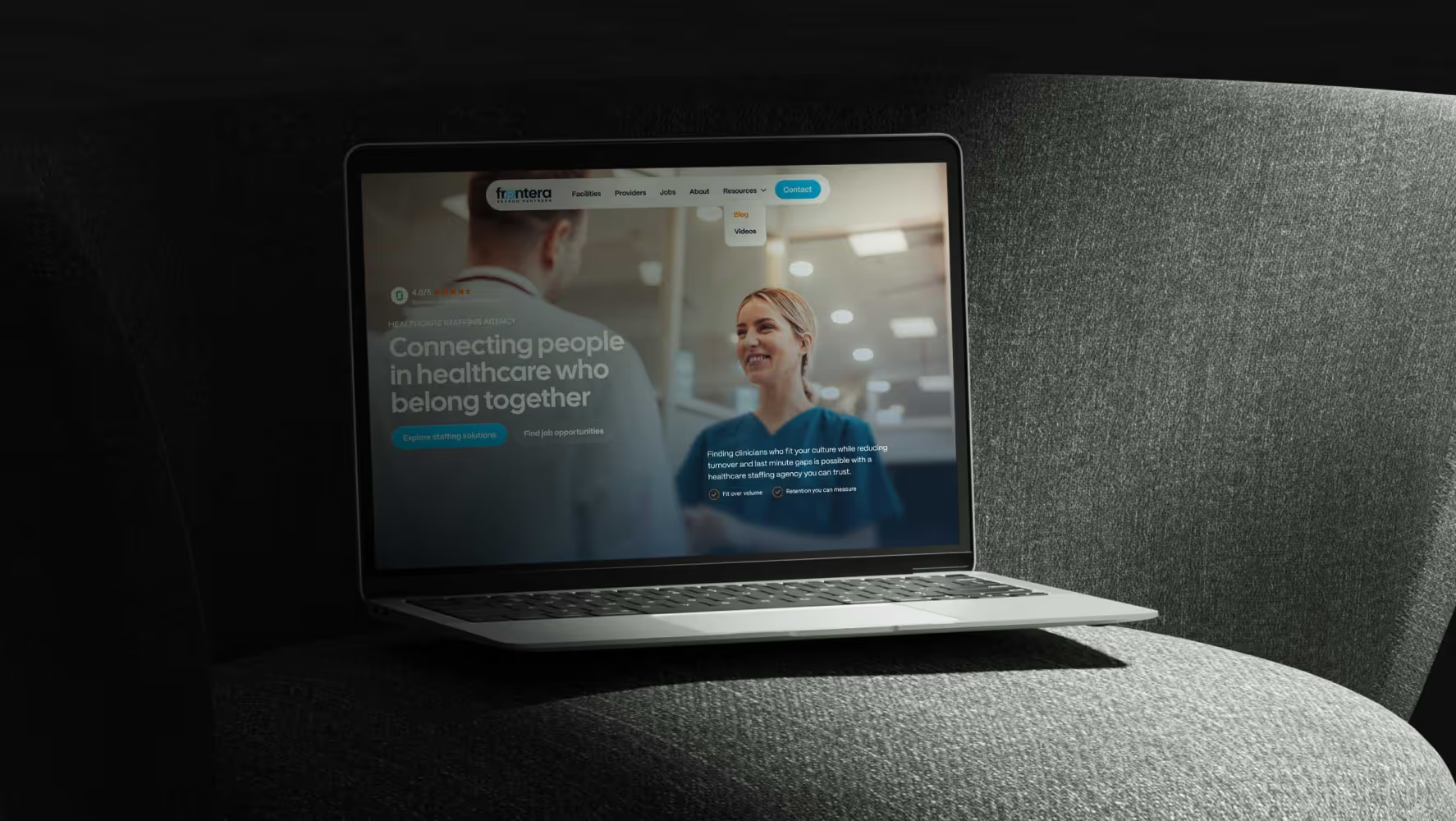
Frontera
Webflow-Migration for the recruitment in health system, wodurch die WordPress-Website von Frontera in eine Inbound-Conversion-Plattform umgewandelt wird.
.svg)
.svg)

Visa-Franchise
Neugestaltung der B2B-Unternehmenswebsite für Visa Franchise mit Schwerpunkt auf Vertrauen, Bildung und Generierung eingehender Nachfrage.
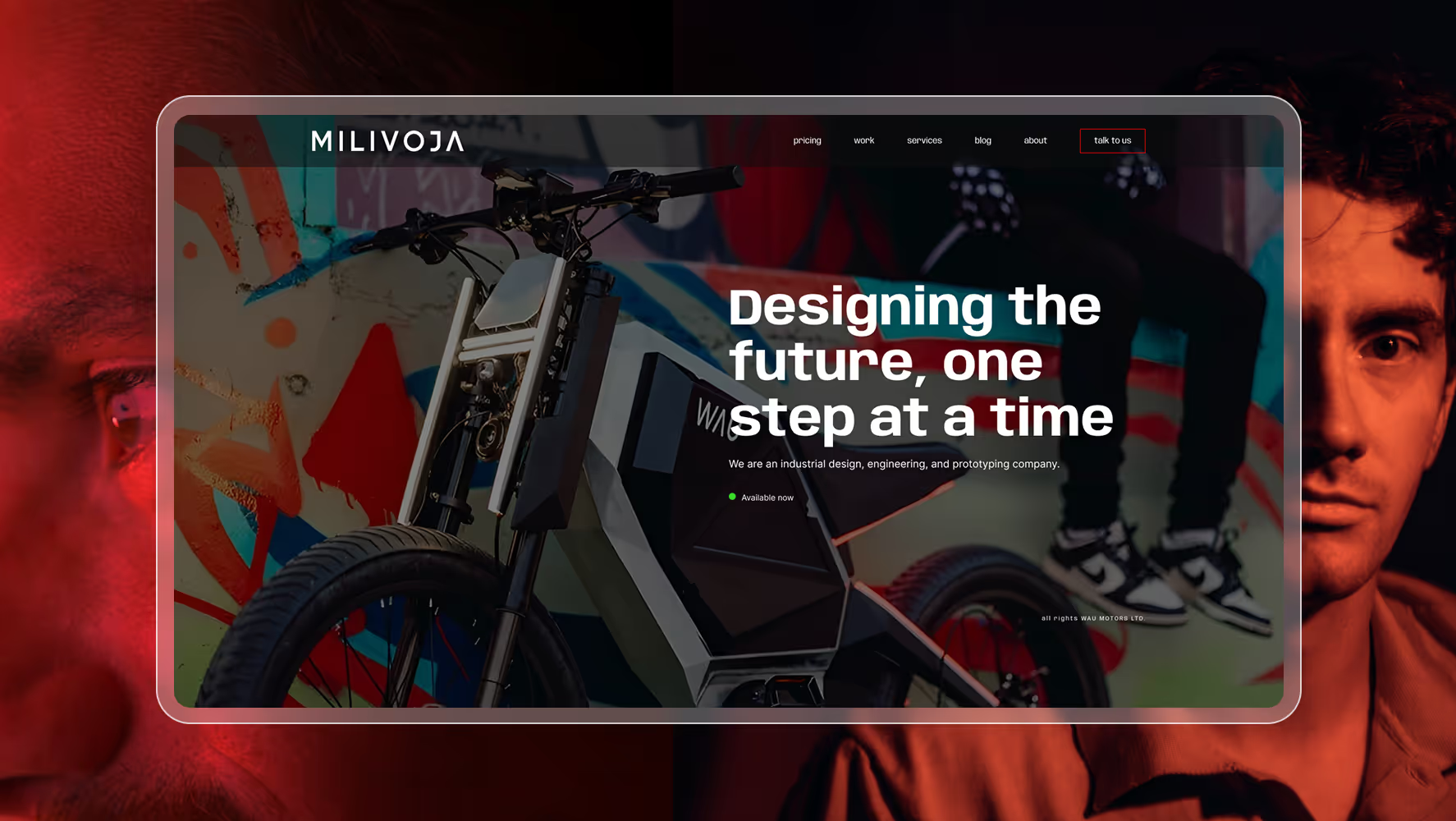
Milivoja
Die Migration von Milivoja WordPress zu Webflow konzentrierte sich auf Leistung, Stabilität und langfristige Wartbarkeit ohne visuelle Änderungen.

Minze
Das Redesign der MINT-Fintech-Webflow-Website konzentrierte sich auf Vertrauen, Konvertierung, Leistung und skalierbare Wachstumsworkflows.
.svg)